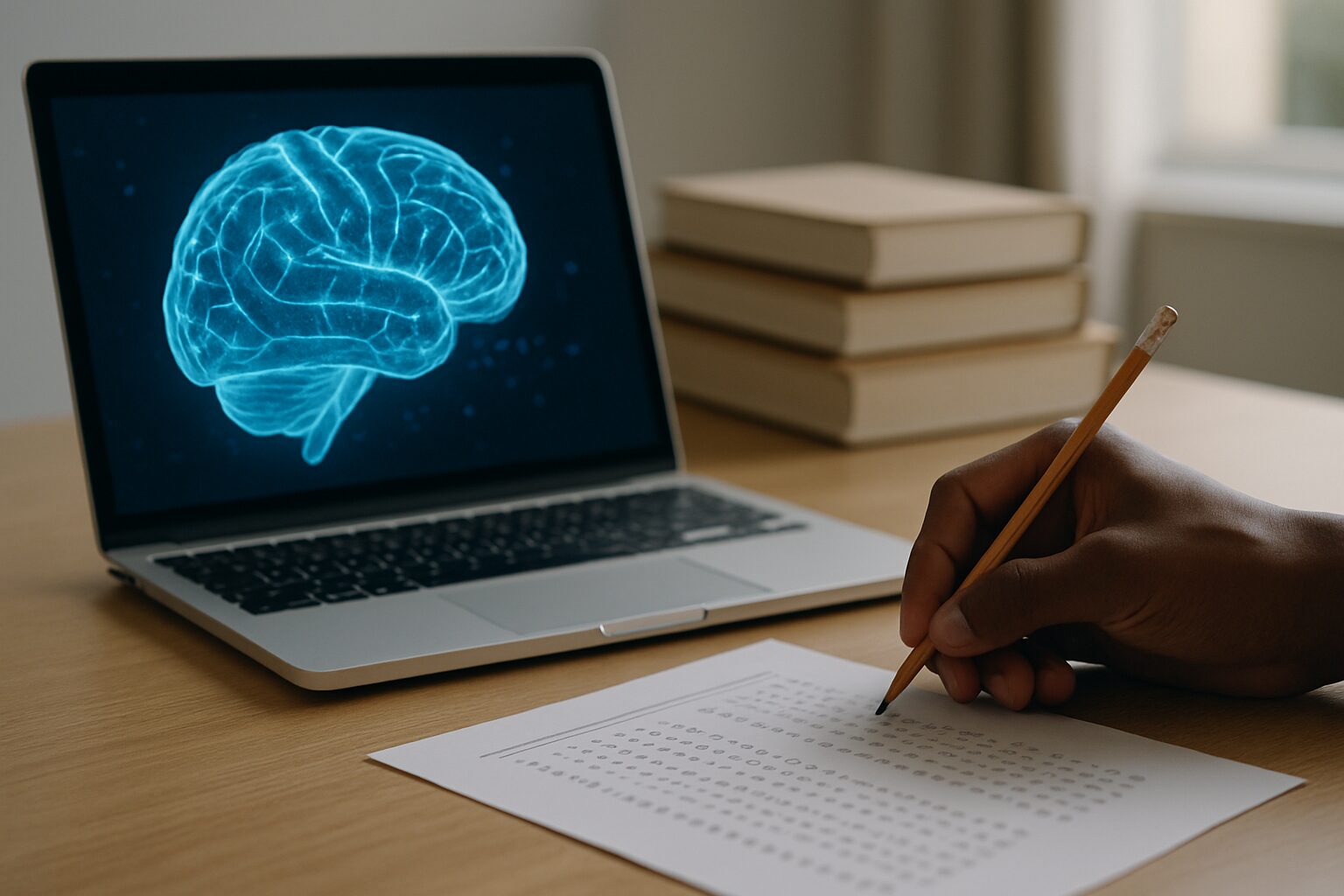
Revolutionizing Education: How Smart Tech is Transforming Exams
Standardized testing plays a significant role in education, often influencing admissions, funding, and policy decisions. The integration of artificial intelligence into these assessments raises ethical questions about fairness, bias, and accessibility. As AI tools are increasingly used to score tests, generate questions, or even administer exams, concerns emerge about how these systems may impact students and institutions. This intersection of technology and evaluation requires careful examination to ensure equitable outcomes.
Why It Matters - Real-world impact
The ethical implications of AI in standardized testing affect students, educators, and society at large. If biased algorithms or flawed data influence scoring, students—particularly those from marginalized backgrounds—could face unfair disadvantages in college admissions or job opportunities. Overreliance on AI-driven assessments might also narrow educational curricula, prioritizing testable skills over critical thinking or creativity. For regular people, this issue matters because it shapes future generations' access to education and career paths, perpetuating systemic inequities. Without oversight, AI could entrench existing disparities rather than fostering fairness in education.
Ethical Concerns - What’s wrong or risky?
Fairness in AI-Driven Testing
One of the most pressing ethical risks is the potential for AI systems to perpetuate or even amplify existing biases in standardized testing. Algorithms trained on historical data may reflect socioeconomic, racial, or gender disparities, leading to unfair outcomes for certain groups. For example, if an AI prioritizes testing metrics correlated with affluent school districts, students from under-resourced areas could be systematically disadvantaged. This ties directly into broader Ethical Concerns: Fairness in how opportunities are distributed.
Discrimination and Bias
AI systems can inadvertently discriminate against protected classes. If training data lacks diversity or contains implicit biases, the AI might score students differently based on demographics rather than merit. Critics argue this could reinforce structural inequalities, while proponents claim AI can reduce human bias if carefully designed. This issue is part of the wider conversation on Ethical Concerns: Discrimination in automated systems.
Transparency and Accountability
Many AI testing tools operate as "black boxes," making it difficult to understand how scores are generated. This lack of transparency raises concerns about accountability—if a student is unfairly evaluated, who is responsible? Some argue that explainable AI is essential for trust, while others believe trade-offs between accuracy and interpretability may be necessary. This relates to the need for Ethical Concerns: Transparency in algorithmic decision-making.
Economic and Access Implications
The adoption of AI in testing could exacerbate economic divides. Wealthier institutions may afford advanced systems, widening the gap between privileged and disadvantaged students. Additionally, over-reliance on AI could shift educational resources toward technology and away from human educators, impacting quality and access. This connects to worries about the Ethical Concern: Economic Impact of automation in education.
Worker Rights and Roles
As AI takes on more roles in test design, administration, and grading, there are concerns about the displacement of educational professionals. Teachers and assessors might see their jobs transformed or reduced, raising questions about their rights and the value of human judgment in education. This reflects broader Ethical Concerns: Worker Rights in an automated world.
Differing Perspectives
Not all stakeholders view these risks uniformly. Some educators and technologists believe AI can make testing more objective and efficient, reducing human error and bias. Others caution that without rigorous oversight, AI could do more harm than good, particularly for vulnerable populations. Policymakers often struggle to balance innovation with protective regulations.
Other Moral Concerns
Beyond the linked categories, issues like data privacy, consent, and the long-term psychological impact of automated assessment on students deserve attention. For instance, constant monitoring via AI could create anxiety or reduce learning to measurable outputs, undermining holistic education.
Solutions - What’s being done or proposed?
Algorithmic Transparency and Auditing
One proposed solution is to mandate transparency in the algorithms used for AI-driven standardized testing. This would involve making the decision-making processes of these systems open to scrutiny by educators, policymakers, and independent auditors. Regular audits could help identify biases, ensure fairness, and build trust in the technology. However, challenges remain in protecting proprietary information while maintaining transparency.
Diverse Training Data
To mitigate bias in AI-based testing, experts suggest using more diverse and representative training data. This includes ensuring that the data reflects a wide range of demographics, socio-economic backgrounds, and learning styles. By doing so, the AI systems can be more equitable in their assessments. Implementing this requires collaboration with schools and communities to gather comprehensive datasets.
Human Oversight and Hybrid Models
Combining AI with human oversight has been suggested as a way to balance efficiency and fairness. In this model, AI handles initial scoring or analysis, but human educators review contentious or borderline cases. This hybrid approach leverages the speed of AI while retaining the nuanced judgment of human professionals, reducing the risk of errors or biases going unchecked.
Legal Frameworks and Regulations
Governments and institutions are exploring legal frameworks to regulate the use of AI in standardized testing. These regulations could set standards for fairness, accountability, and data privacy. For example, laws might require impact assessments before deploying AI tools in education. Enforcement mechanisms would be necessary to ensure compliance and address grievances from students or educators.
Bias Mitigation Tools
Technical solutions such as bias mitigation tools are being developed to identify and correct biases in AI systems. These tools can analyze test questions, scoring patterns, and outcomes to flag potential disparities. Integrating such tools into AI testing platforms can help proactively address inequities, though their effectiveness depends on continuous updates and validation.
Student and Educator Feedback Systems
Creating feedback systems where students and educators can report issues with AI-driven testing is another approach. This participatory method allows for real-world insights into how the technology performs and where it may fail. Schools could use this feedback to adjust testing methods or advocate for changes in AI systems, fostering a more collaborative environment.
Alternative Assessment Methods
Some advocate for moving away from standardized testing altogether, proposing alternative assessment methods like project-based evaluations or portfolios. AI could still play a role in these methods, but the focus would shift to holistic and continuous assessment rather than high-stakes testing. This approach aims to reduce pressure on students and provide a more comprehensive view of their abilities.
Examples and Real Cases
ChatGPT Used for College Admissions Essays (2023)
In 2023, universities reported a surge in AI-generated admissions essays, with tools like ChatGPT making it difficult to assess genuine student writing abilities. The University of Texas at Austin implemented AI-detection software, but flagged some legitimate essays as AI-written, raising fairness concerns.
Proctorio's AI Proctoring Controversy (2020)
During the COVID-19 pandemic, Proctorio's AI-powered exam monitoring software was widely adopted but faced criticism for biased facial recognition that disproportionately flagged students of color. Arizona State University suspended its use after complaints that the system created unequal testing conditions.
Hypothetical: AI-Graded Standardized Tests Favoring Certain Dialects
A hypothetical scenario where an AI grading system for national oral language exams consistently scores students with specific regional accents lower. Without proper dialect training data, the system could systematically disadvantage students from particular geographic or socioeconomic backgrounds.
ETS's AI Scoring System for GRE Essays (2019)
Educational Testing Service (ETS) deployed e-rater, an AI system for grading GRE analytical writing sections, but studies showed it could be gamed by using complex vocabulary without coherent arguments. This raised questions about whether the AI truly measured writing competency.
Hypothetical: Adaptive Testing Creating Unfair Advantages
In a future scenario, an AI-driven adaptive SAT that adjusts question difficulty could disadvantage students from underfunded schools. If the algorithm interprets initial struggles as low ability, it might not present questions that could demonstrate the student's full potential.
Frequently Asked Questions
What is AI in standardized testing?
AI in standardized testing refers to the use of artificial intelligence technologies to create, administer, score, or analyze standardized tests. This can include automated essay scoring, adaptive testing that adjusts difficulty based on student responses, and data analysis to identify learning gaps.
Why is AI important in standardized testing?
AI is important in standardized testing because it can make tests more efficient, personalized, and fair. It can reduce grading biases, provide instant feedback, and adapt to individual student needs, helping to improve educational outcomes and access for diverse learners.
How does AI improve access to standardized testing?
AI improves access by enabling remote proctoring, offering multilingual support through translation tools, and providing accommodations for students with disabilities (like text-to-speech). It also allows tests to be taken anytime, anywhere, reducing barriers for underserved communities.
What are the risks of using AI in standardized testing?
Risks include potential biases in AI algorithms, privacy concerns with student data, over-reliance on technology, and the digital divide where some students may lack access to the required devices or internet connectivity for AI-powered tests.
Can AI replace human teachers in standardized testing?
No, AI cannot fully replace human teachers in testing. While AI can handle grading and administration, teachers provide critical context, emotional support, and nuanced evaluationu2014especially for open-ended responses or complex student needs that AI may misinterpret.