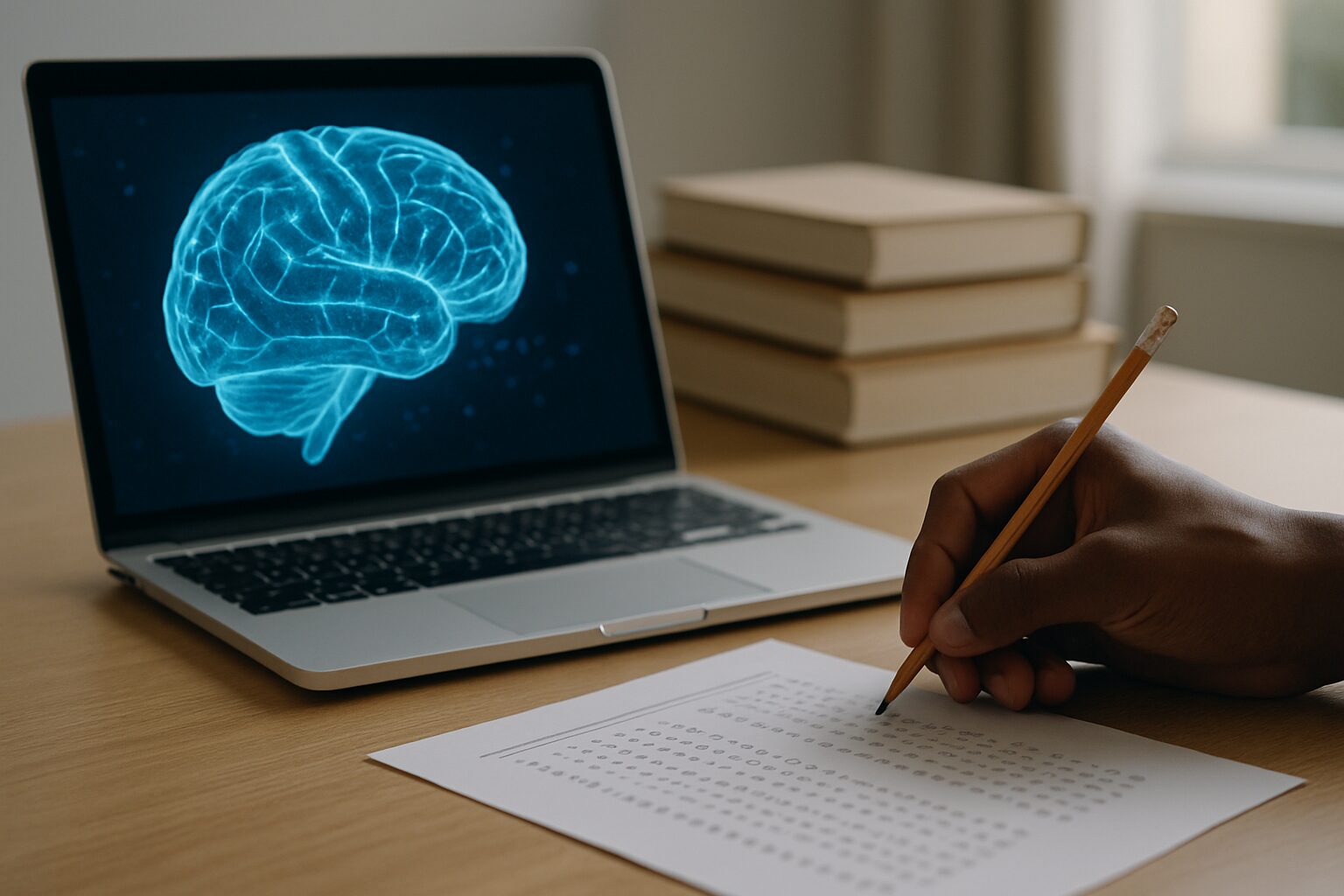
The Hidden Flaws in Automated Grading Systems
AI grading tools are increasingly used in education to assess student work, but they can reflect and amplify biases present in their training data or design. These biases may lead to unfair or inaccurate evaluations for certain groups of students based on factors like language use, cultural context, or writing style. Addressing bias in AI grading is critical to ensure equitable outcomes in educational settings.
Why It Matters - Real-world impact
Bias in AI grading tools have real-world consequences for students, educators, and society at large. When algorithms unfairly disadvantage certain groups—whether due to racial, socioeconomic, or linguistic biases—students may receive lower grades, miss academic opportunities, or even face unjust disciplinary actions. Teachers relying on these tools may unknowingly perpetuate inequities, while schools and policymakers risk embedding systemic discrimination into education systems. For regular people, this matters because education shapes future opportunities, and biased tools can deepen societal divides. If left unchecked, such biases could reinforce inequality, limit social mobility, and erode trust in both technology and educational institutions.
Ethical Concerns - What’s wrong or risky?
What is Bias in AI Grading?
AI grading tools use algorithms to assess student work, from essays to multiple-choice exams. While they promise efficiency, these systems can perpetuate and even amplify existing societal biases, raising serious ethical questions.
Fairness Concerns
Fairness in AI grading means that the tool should evaluate all students equitably, regardless of background. However, if training data over-represents certain demographics or writing styles, the AI may disadvantage others. For example, an essay grader trained predominantly on texts from native English speakers might penalize non-native speakers for unconventional phrasing, even if the content is valid. This undermines the principle of equal opportunity in education. Learn more about Ethical Concerns: Fairness.
Discrimination Risks
AI systems can inadvertently discriminate based on race, gender, socioeconomic status, or disability. If historical grading data reflects human biases (e.g., lower scores for certain groups), the AI may learn and repeat these patterns. A tool might associate certain dialects or cultural references with "poor quality," unfairly affecting marginalized students. This not only harms individuals but reinforces systemic inequalities. Explore issues of Ethical Concerns: Discrimination.
Transparency Issues
Many AI grading tools operate as "black boxes," where the reasoning behind a score is unclear. Students and educators may not understand why an essay received a particular grade, making it difficult to challenge errors or learn from feedback. Lack of transparency can erode trust in the educational system and prevent accountability for biased outcomes. Delve into Ethical Concerns: Transparency.
Economic and Access Implications
Schools with fewer resources might rely heavily on AI grading to cut costs, potentially reducing teacher involvement and personalized feedback. This could widen the gap between well-funded and underfunded institutions, affecting educational quality and access. Over time, this might impact students' future economic opportunities. Consider the Ethical Concern: Economic Impact.
Worker Rights and Roles
Some argue that AI grading could devalue teachers' expertise and lead to job reduction, particularly for roles focused on assessment. Educators might be pressured to conform to AI-driven metrics, limiting their professional autonomy and potentially affecting the quality of education. Read about Ethical Concerns: Worker Rights.
Differing Perspectives
Not everyone views these risks uniformly. Proponents of AI grading highlight its potential to reduce human bias and provide consistent evaluations, arguing that with careful design, tools can be fairer than humans. Others caution that over-reliance on technology might neglect the nuanced, empathetic aspects of teaching that foster student growth.
Other Moral Considerations
Beyond the linked categories, there are concerns about data privacy (e.g., storing student work), accountability for errors, and the long-term impact on critical thinking if students tailor work to please algorithms rather than develop authentic skills.
Solutions - What’s being done or proposed?
Diverse Training Data
One technical approach to reducing bias in AI grading tools is ensuring the training data is diverse and representative of all student demographics. This includes collecting essays, assignments, and tests from a wide range of cultural, linguistic, and socioeconomic backgrounds. By doing so, the AI model can learn to recognize and fairly evaluate different writing styles, dialects, and perspectives, minimizing the risk of favoring one group over another.
Algorithmic Audits
Regular algorithmic audits conducted by independent third parties can help identify and mitigate biases in AI grading systems. These audits involve testing the model's outputs across diverse student groups to detect disparities. Institutions can then adjust the algorithms or retrain the models to address any unfair patterns. Transparency in audit results is crucial to building trust among educators and students.
Human-AI Collaboration
Combining AI grading tools with human oversight ensures a balanced approach. Educators can review AI-generated grades, especially in borderline cases or when the system flags potential biases. This hybrid model leverages the efficiency of AI while maintaining human judgment to correct errors or biases that the algorithm might introduce.
Bias Awareness Training
Providing bias awareness training for developers and educators involved in creating and using AI grading tools is a social solution. By educating stakeholders about the types of biases that can emerge and their impacts, teams can proactively design more equitable systems and critically assess AI outputs. This training should include case studies and best practices for mitigating bias in educational technology.
Policy and Regulation
Governments and educational institutions can implement policies and regulations to ensure AI grading tools meet fairness standards. This might include mandatory bias testing, transparency requirements, and accountability measures for tool providers. Legal frameworks can also mandate redress mechanisms for students who believe they were unfairly graded by an AI system.
Student Feedback Mechanisms
Incorporating student feedback mechanisms allows learners to report perceived biases or inaccuracies in AI grading. This institutional solution empowers students to voice concerns and provides valuable data for improving the system. Schools can use this feedback to identify recurring issues and work with developers to refine the AI models accordingly.
Open-Source and Transparent Models
Developing open-source AI grading tools promotes transparency and allows the broader educational community to scrutinize and improve the algorithms. When models are accessible, researchers and educators can collaboratively identify biases and suggest modifications. Transparency in how grades are determined also helps build trust in the technology.
Examples and Real Cases
Amazon's AI Recruiting Tool (2018)
In 2018, Amazon scrapped an AI recruiting tool after discovering it was biased against women. The system, trained on resumes submitted over a 10-year period, penalized applications that included the word 'womenu2019s' (e.g., 'womenu2019s chess club captain') and downgraded graduates from all-womenu2019s colleges.
UK A-Level Algorithm Grading (2020)
In 2020, the UK's algorithm for A-level grades disproportionately downgraded students from disadvantaged schools. The algorithm relied on historical school performance data, perpetuating systemic biases and leading to mass protests before the government reversed the results.
Hypothetical: AI Grading Essays in Standardized Tests
A hypothetical AI essay grader trained on high-scoring essays from affluent school districts might undervalue vernacular language or cultural references common in underfunded schools. This could systematically lower scores for students from marginalized communities without explicit bias in the code.
Proctoriou2019s Facial Detection (2020u2013Present)
Proctoriou2019s remote proctoring software has faced criticism for racial bias in facial detection. Multiple students reported being flagged as 'suspicious' due to darker skin tones or natural hairstyles, leading to unfair exam disruptions and academic penalties.
Hypothetical: AI Grading STEM Assignments
An AI grading coding assignments might favor solutions that align with dominant teaching styles (e.g., specific commenting conventions). Students from non-traditional or self-taught backgrounds could be penalized despite functional correctness, reinforcing narrow definitions of 'good' code.
Frequently Asked Questions
What is bias in AI grading tools?
Bias in AI grading tools refers to unfair or inaccurate results caused by flaws in the data or algorithms used. For example, the tool might score students differently based on gender, race, or language background without meaning to.
Why is bias in AI grading tools a problem?
It can unfairly affect students' grades, opportunities, and future success. If the AI favors certain groups over others, it creates inequality in education and limits access for marginalized students.
How does bias happen in AI grading systems?
Bias often comes from the data used to train the AI. If the data mostly includes examples from one group (e.g., native English speakers), the AI may struggle to fairly grade students from different backgrounds.
Can bias in AI grading tools be fixed?
Yes, by using diverse training data, testing for fairness, and regularly updating the system. Educators and developers must work together to reduce bias and ensure equal treatment for all students.
How does AI grading bias affect students today?
Students from underrepresented groups may receive lower grades or fewer opportunities due to unfair AI scoring. This can impact scholarships, college admissions, and career paths, widening existing education gaps.