The Hidden Risks of AI-Driven Safety Choices: What You Need to Know
Overreliance on AI for safety decisions occurs when human operators defer critical judgments to automated systems without adequate oversight. This can lead to unintended risks if the AI lacks sufficient context, fails unexpectedly, or operates outside its intended scope. The issue raises concerns about accountability and the potential erosion of human decision-making skills in safety-critical domains.
Why It Matters - Real-world impact
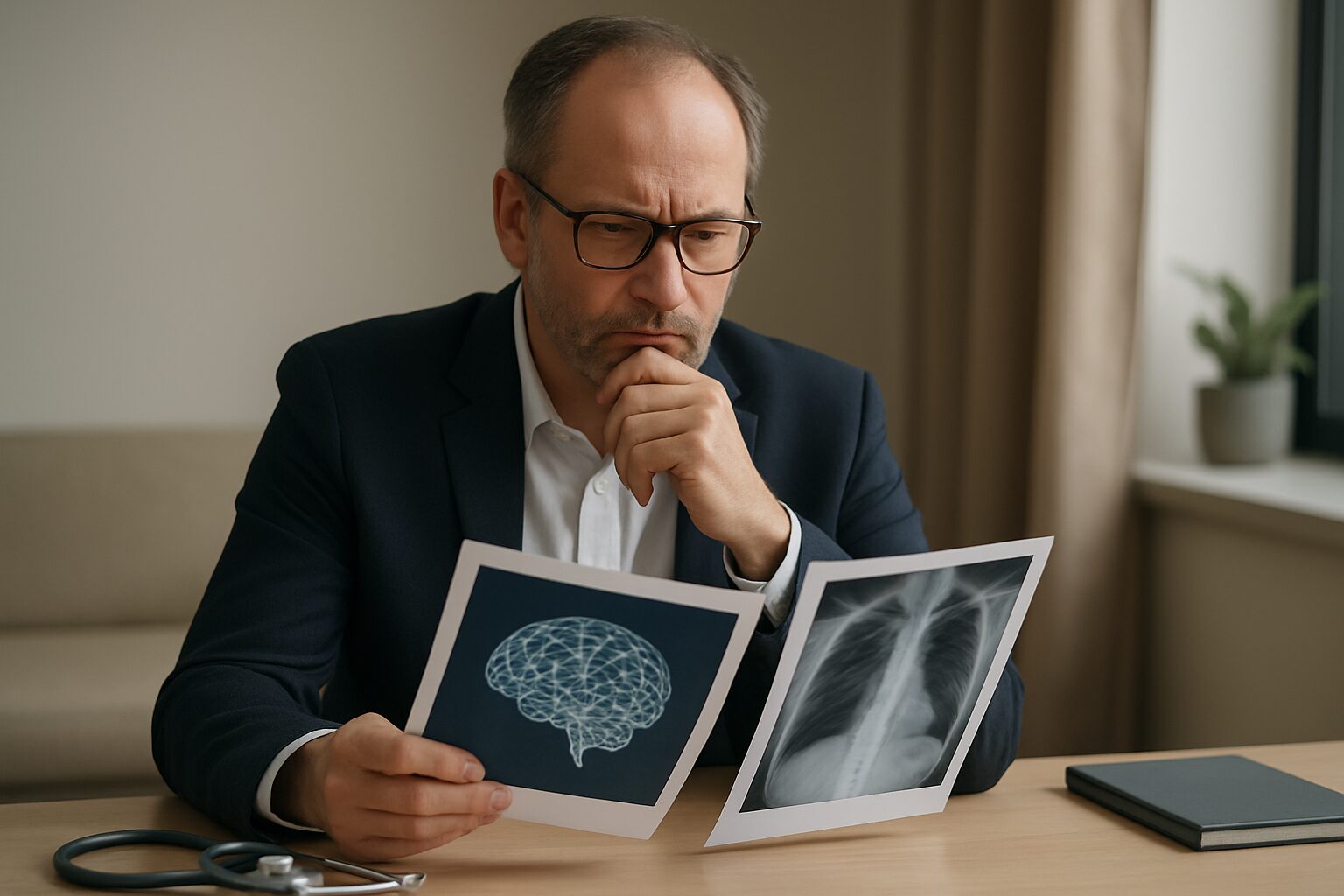
Overreliance on AI for safety-critical decisions poses tangible risks to individuals and society. From autonomous vehicles making split-second choices to medical diagnostics or criminal sentencing algorithms, flawed or biased AI systems can lead to fatal accidents, misdiagnoses, or unjust outcomes. Vulnerable populations—such as marginalized communities already subject to systemic biases—are disproportionately affected when these systems fail. Even in everyday contexts, like workplace safety monitoring or home security AI, misplaced trust in automation can create dangerous blind spots. Regular people should care because these technologies increasingly govern life-altering decisions without sufficient transparency, accountability, or human oversight.
Ethical Concerns - What’s wrong or risky?
Overreliance on AI for Safety Decisions: A Web of Ethical Risks
As artificial intelligence becomes increasingly embedded in safety-critical systems—from autonomous vehicles to medical diagnostics and industrial controls—overreliance on its decision-making poses profound ethical challenges. While AI can enhance efficiency and consistency, uncritical dependence risks eroding human judgment and accountability, leading to a cascade of moral concerns.
Fairness and Discrimination
AI systems trained on biased data can perpetuate and even amplify existing societal inequalities. In safety contexts, this might mean that certain demographic groups face higher risks due to algorithmic errors or skewed training examples. For instance, facial recognition used in security systems might fail more often for people of color, leading to unjust outcomes. This ties directly into concerns about fairness and discrimination, as automated safety decisions could systematically disadvantage vulnerable populations.
Transparency and Accountability
Many AI models, especially deep learning systems, operate as "black boxes," making it difficult to understand how they arrive at specific safety decisions. This lack of transparency complicates accountability when things go wrong. If an autonomous vehicle causes an accident, who is responsible—the developer, the user, or the algorithm itself? Opaque decision-making undermines trust and hinders effective oversight.
Economic and Employment Implications
Overreliance on AI for safety roles may lead to reduced human oversight, potentially resulting in job loss for safety inspectors, quality controllers, or emergency responders. This economic shift doesn't merely affect employment statistics; it risks devaluing human expertise and intuition, which are often crucial in nuanced, unpredictable scenarios. Moreover, the economic impact could widen inequalities if displaced workers lack opportunities for retraining.
Worker Rights and Autonomy
In workplaces where AI directs safety protocols, employees may have diminished autonomy, forced to comply with algorithmic directives without recourse or explanation. This raises concerns about worker rights, as individuals might be subjected to decisions that affect their well-being without adequate human review or empathy.
Diverse Perspectives on AI Reliance
Not everyone views these risks uniformly. Proponents argue that AI can process vast datasets more reliably than humans, reducing errors caused by fatigue or bias. They emphasize that AI augments rather than replaces human judgment. Skeptics, however, warn that delegation of safety decisions to machines could lead to complacency, where humans default to AI recommendations without critical evaluation. Some ethicists also point to broader moral concerns, such as the erosion of human dignity and the potential for AI to make life-and-death decisions without moral reasoning.
Balancing the benefits of AI in safety with these ethical pitfalls requires robust governance, inclusive design, and ongoing human oversight to ensure that technology serves humanity equitably and responsibly.
Solutions - What’s being done or proposed?
Implementing Human-in-the-Loop Systems
One proposed solution is to integrate human oversight into AI-driven safety decisions through human-in-the-loop systems. This approach ensures that critical decisions are reviewed or co-made by humans, reducing the risk of unchecked AI errors. For example, in autonomous vehicles, a human operator might intervene in ambiguous situations. While this adds a layer of safety, it also introduces delays and relies on human attentiveness, which can be inconsistent.
Developing Robust AI Auditing Frameworks
To address overreliance, experts suggest creating comprehensive auditing frameworks to evaluate AI systems' safety performance. These frameworks would include regular testing, transparency requirements, and third-party reviews to ensure accountability. For instance, regulatory bodies could mandate audits for AI used in healthcare diagnostics. However, implementing such frameworks requires significant resources and standardized metrics, which are still under development.
Enhancing AI Explainability and Transparency
Improving the explainability of AI systems is another key solution. By making AI decision-making processes more transparent, users can better understand and trustu2014or questionu2014the outcomes. Techniques like interpretable machine learning models or clear documentation of AI logic are being explored. While this helps mitigate blind reliance, highly complex AI systems may never be fully explainable, posing ongoing challenges.
Legal and Regulatory Safeguards
Governments and institutions are considering legal measures to limit overreliance on AI for safety-critical decisions. This could include laws requiring human approval for certain AI actions or liability rules that hold organizations accountable for AI failures. For example, the EU's AI Act proposes strict regulations for high-risk AI applications. Enforcement remains a hurdle, especially across jurisdictions with varying standards.
Promoting AI Literacy and Training
Educating users and decision-makers about AI's limitations is a social solution to overreliance. Training programs can help professionals recognize when to trust AI and when to seek human judgment. Industries like aviation already use simulation-based training to balance automation and human skills. Widespread adoption of such programs, however, requires time and investment in workforce development.
Designing Fail-Safe Mechanisms
Technical solutions include building fail-safe mechanisms into AI systems to prevent catastrophic failures. For instance, an AI controlling industrial equipment might have automatic shutdown protocols if it detects anomalies. While this reduces risks, designing universally effective fail-safes is difficult, as edge cases and unforeseen scenarios can still arise.
Examples and Real Cases
Boeing 737 MAX Crashes (2018-2019)
The Boeing 737 MAX crashes in 2018 and 2019, which killed 346 people, were partly attributed to overreliance on the MCAS (Maneuvering Characteristics Augmentation System) AI system. Boeing assumed the system would compensate for design flaws without adequate pilot training or fail-safes.
Tesla Autopilot Fatalities (2016-Present)
Multiple fatal crashes involving Tesla's Autopilot, such as the 2016 Joshua Brown incident, occurred due to drivers overtrusting the system. Despite warnings, users treated the AI as fully autonomous, leading to preventable accidents.
Uber Self-Driving Fatality (2018)
In 2018, an Uber self-driving car struck and killed Elaine Herzberg in Arizona. The AI failed to recognize her as a pedestrian, and the human safety driver was distracted, highlighting overreliance on incomplete automation.
Hypothetical: AI-Powered Medical Triage Misdiagnosis
A hospital deploys an AI system to prioritize emergency room patients but fails to account for rare conditions. A patient with an unusual symptom is deprioritized and suffers severe complications due to delayed care.
Hypothetical: Autonomous Weapons Malfunction
A military AI system designed to identify hostile targets misclassifies civilians during a conflict, leading to unintended casualties. Human operators, assuming the AI's accuracy, fail to intervene in time.
Frequently Asked Questions
What does overreliance on AI for safety decisions mean?
Overreliance on AI for safety decisions means depending too much on artificial intelligence systems to make critical safety or risk-related choices without proper human oversight or validation. This can lead to errors if the AI is flawed, biased, or lacks context.
Why is overreliance on AI for safety decisions a problem?
It's a problem because AI systems can make mistakes, lack human intuition, or be trained on incomplete data. Blindly trusting AI for safety-critical decisions (like medical diagnoses or autonomous driving) can result in accidents, ethical issues, or unintended harm.
How does overreliance on AI impact workplace safety today?
In workplaces, overusing AI for safety monitoring (like hazard detection) without human checks can miss risks the AI wasn't trained to recognize. For example, a malfunctioning AI might fail to alert workers about unsafe conditions, leading to injuries.
What can we learn from past incidents of AI safety failures?
Past incidents (like self-driving car crashes or biased medical algorithms) teach us that AI should assist, not replace, human judgment. Combining AI with human expertise and regular audits improves safety outcomes.
How can we balance AI and human input for better safety decisions?
The best approach is to use AI as a tool to support human decision-makers, not replace them. Humans should validate AI suggestions, provide context, and intervene when the AI's output seems unreliable or risky.