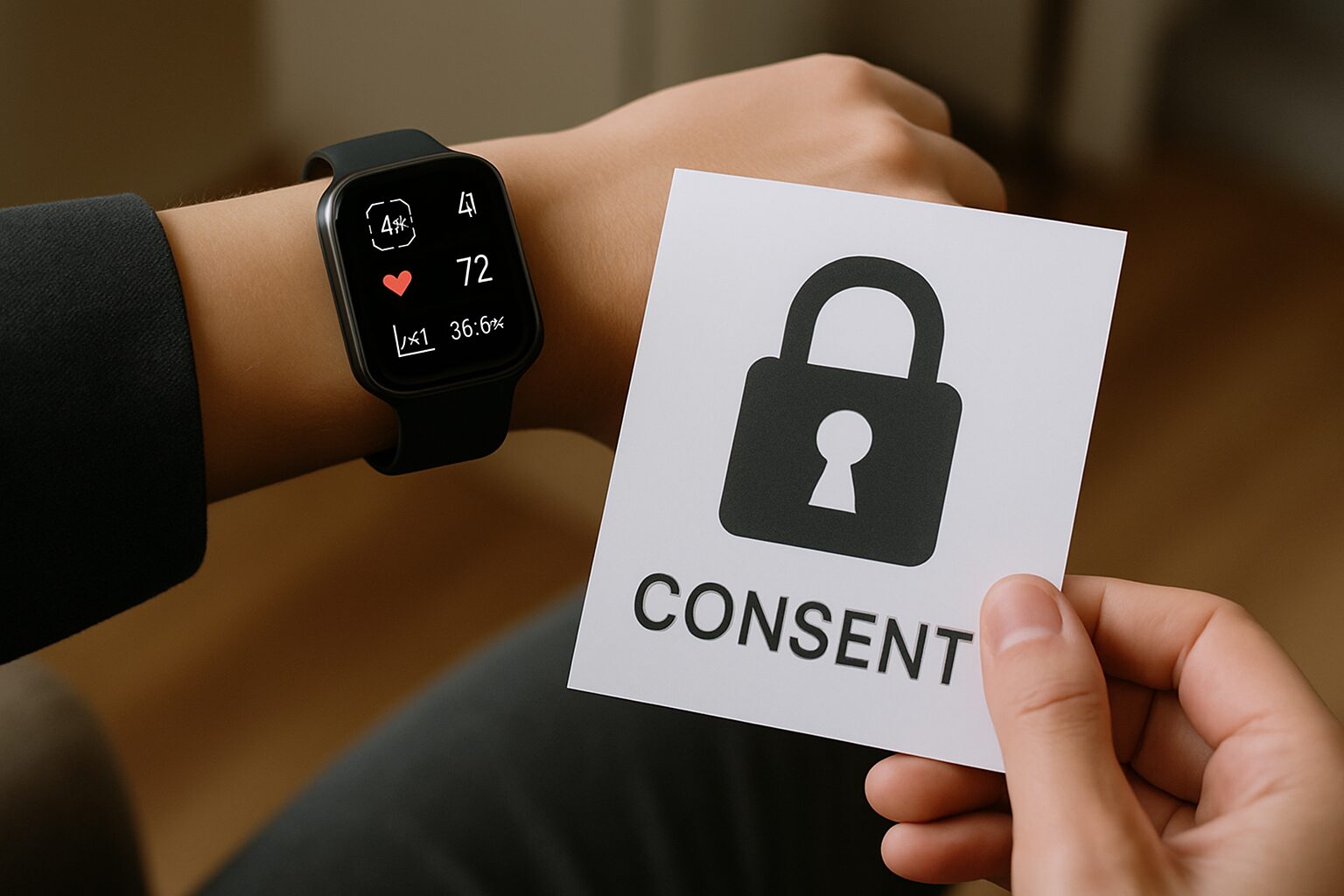
Securing the Future: How Tech Safeguards Your Identity in the Workplace
The use of AI to process biometric data—such as fingerprints, facial recognition, or voice patterns—raises significant privacy concerns in industrial applications. Companies increasingly rely on these technologies for security, authentication, and workforce monitoring, but this collection and analysis of sensitive personal data creates risks of misuse or unauthorized access. Balancing innovation with ethical data handling practices is critical to maintaining trust and compliance with privacy regulations.
Why It Matters - Real-world impact
The ethical handling of biometric data in AI systems is a pressing concern because it directly impacts individuals' privacy, security, and autonomy. From employees subjected to workplace surveillance to consumers using facial recognition for authentication, the misuse of biometric data can lead to irreversible harm, such as identity theft, discrimination, or unauthorized tracking. Vulnerable groups, including minorities and marginalized communities, often face disproportionate risks due to biased algorithms or lax safeguards. If corporations or governments exploit this data without consent, it erodes trust and undermines fundamental rights. Regular people should care because once biometric data—like fingerprints or iris scans—is compromised, it cannot be replaced, leaving lifelong vulnerabilities. The stakes are high, as unchecked use of such technology could normalize invasive surveillance and diminish personal freedoms.
Ethical Concerns - What’s wrong or risky?
Ethical Risks in AI and Biometric Data Privacy
As industries increasingly adopt AI systems that process biometric data—such as facial recognition, fingerprint scans, or voice analysis—ethical concerns around privacy and consent become critical. These systems, while promising efficiency and security, introduce significant moral challenges that must be addressed.
Discrimination and Fairness
Biometric AI can perpetuate or even amplify existing biases. For example, facial recognition algorithms have been shown to have higher error rates for people of color, women, and older individuals, leading to unfair treatment in hiring, security screenings, or access to services. This ties directly into concerns about discrimination and undermines principles of fairness, as systems may not perform equitably across diverse populations.
Transparency and Accountability
Many AI systems operate as "black boxes," making it difficult for individuals to understand how their biometric data is being used or why certain decisions are made. Lack of transparency erodes trust and complicates accountability, especially when errors or misuse occur. Without clear explanations, people cannot challenge unfair outcomes, violating their right to informed consent.
Worker Rights and Economic Impact
In workplace settings, biometric monitoring—such as tracking employee movements, fatigue levels, or productivity—can infringe on worker rights by creating a culture of surveillance and reducing autonomy. Additionally, the automation of roles through biometric AI may contribute to job loss, disproportionately affecting low-skilled workers and raising concerns about the broader economic impact on communities and labor markets.
Differing Perspectives
Not all stakeholders view these risks uniformly. Proponents argue that biometric AI enhances security, reduces fraud, and optimizes operations, justifying its use with proper safeguards. Critics, however, emphasize the potential for abuse, such as mass surveillance, erosion of personal freedoms, and encoded biases that harm vulnerable groups. Some also raise concerns about data breaches or misuse of sensitive biometric information, which could lead to identity theft or irreversible privacy violations.
Other ethical issues include consent—whether it is freely given and revocable—and the long-term societal effects of normalizing biometric surveillance. Balancing innovation with ethical guardrails remains a pivotal challenge for industry leaders and policymakers alike.
Solutions - What’s being done or proposed?
Stronger Legal Frameworks and Regulations
Governments and regulatory bodies have proposed stricter laws to govern the collection, storage, and use of biometric data by AI systems. Examples include the EU's General Data Protection Regulation (GDPR), which imposes heavy penalties for misuse of personal data, and biometric-specific laws like Illinois' Biometric Information Privacy Act (BIPA). These frameworks mandate transparency, user consent, and data minimization to protect individuals' privacy.
Decentralized Data Storage
Technical solutions such as decentralized or federated learning systems have been suggested to minimize centralized storage of biometric data. By keeping data on users' devices or in secure, distributed networks, the risk of large-scale breaches is reduced. Blockchain technology has also been explored for creating immutable audit trails of data access and usage.
Privacy-Preserving AI Techniques
Researchers have developed AI methods like differential privacy and homomorphic encryption to process biometric data without exposing raw information. Differential privacy adds noise to datasets to prevent identification of individuals, while homomorphic encryption allows computations on encrypted data. These techniques aim to balance utility with privacy.
Transparency and User Control
Many advocate for systems that provide clear explanations of how biometric data is used and give users granular control over their information. This includes opt-in/opt-out mechanisms, easy-to-understand privacy policies, and dashboards where users can view and manage their data. Transparency builds trust and empowers individuals to make informed choices.
Ethical Review Boards and Audits
Institutions have begun implementing ethical review processes for AI projects involving biometric data, similar to those used in medical research. Independent audits and impact assessments can identify potential risks and ensure compliance with ethical standards. Some companies also establish internal ethics committees to oversee AI deployments.
Public Awareness and Education
Campaigns and educational programs aim to inform the public about the risks and rights related to biometric data. By increasing awareness, individuals can better advocate for their privacy and hold organizations accountable. Workshops, media coverage, and school curricula help demystify AI and biometric technologies.
Industry Self-Regulation and Standards
Some tech companies have formed consortiums or adopted voluntary standards to promote responsible use of biometric data. Initiatives like the Partnership on AI encourage best practices, while certification programs help users identify compliant products. Though not legally binding, these efforts can set benchmarks for ethical behavior.
Examples and Real Cases
Clearview AI's Facial Recognition Controversy (2020)
In 2020, Clearview AI faced widespread criticism for scraping billions of images from social media platforms without consent to build its facial recognition database. The company's practices led to lawsuits and bans in multiple countries, including Canada and Australia, for violating privacy laws.
Amazon's Rekognition and Law Enforcement (2018)
Amazon's Rekognition tool was used by law enforcement agencies like the Orlando Police Department in 2018, raising concerns about racial bias and lack of transparency. Civil rights groups, including the ACLU, protested the use of this biometric technology without proper oversight or public consent.
Hypothetical: Retail Chain Using Emotion Recognition
A hypothetical retail chain could deploy AI-powered emotion recognition cameras at checkout lines to analyze customer satisfaction without explicit consent. This could lead to backlash if customers discover their biometric data is being collected and analyzed for marketing purposes without their knowledge.
IBM's Diversity in Faces Dataset (2019)
In 2019, IBM released the 'Diversity in Faces' dataset to improve facial recognition fairness, but it included images scraped from Flickr without explicit consent. While intended to address bias, the project sparked debate about the ethics of using personal data without permission, even for beneficial purposes.
Hypothetical: Workplace Productivity Monitoring via Biometrics
A company might hypothetically introduce AI systems that track employees' facial expressions and keystrokes to measure productivity, claiming it improves efficiency. Employees could challenge this as an invasion of privacy if the biometric data collection isn't optional or transparently communicated.
Frequently Asked Questions
What is biometric data in AI?
Biometric data in AI refers to unique physical or behavioral characteristics like fingerprints, facial recognition, or voice patterns that are collected and analyzed by artificial intelligence systems to identify individuals.
Why is biometric data privacy important?
Biometric data privacy is important because this information is highly personal and permanentu2014unlike passwords, you can't change your fingerprints or face. If misused, it can lead to identity theft, surveillance, or discrimination.
How do companies use AI with biometric data?
Companies use AI with biometric data for security (like unlocking phones with facial recognition), employee time tracking, customer authentication, and personalized marketing. However, this raises concerns about consent and data protection.
What does 'consent' mean for biometric data collection?
Consent means individuals must be clearly informed about how their biometric data will be used and must voluntarily agree before companies collect or process it. Without proper consent, data collection may violate privacy laws.
Are there laws protecting biometric data privacy?
Yes, laws like GDPR (Europe) and BIPA (Illinois, USA) regulate biometric data use, requiring transparency, consent, and secure storage. Many regions are updating laws to address AI advancements in this field.