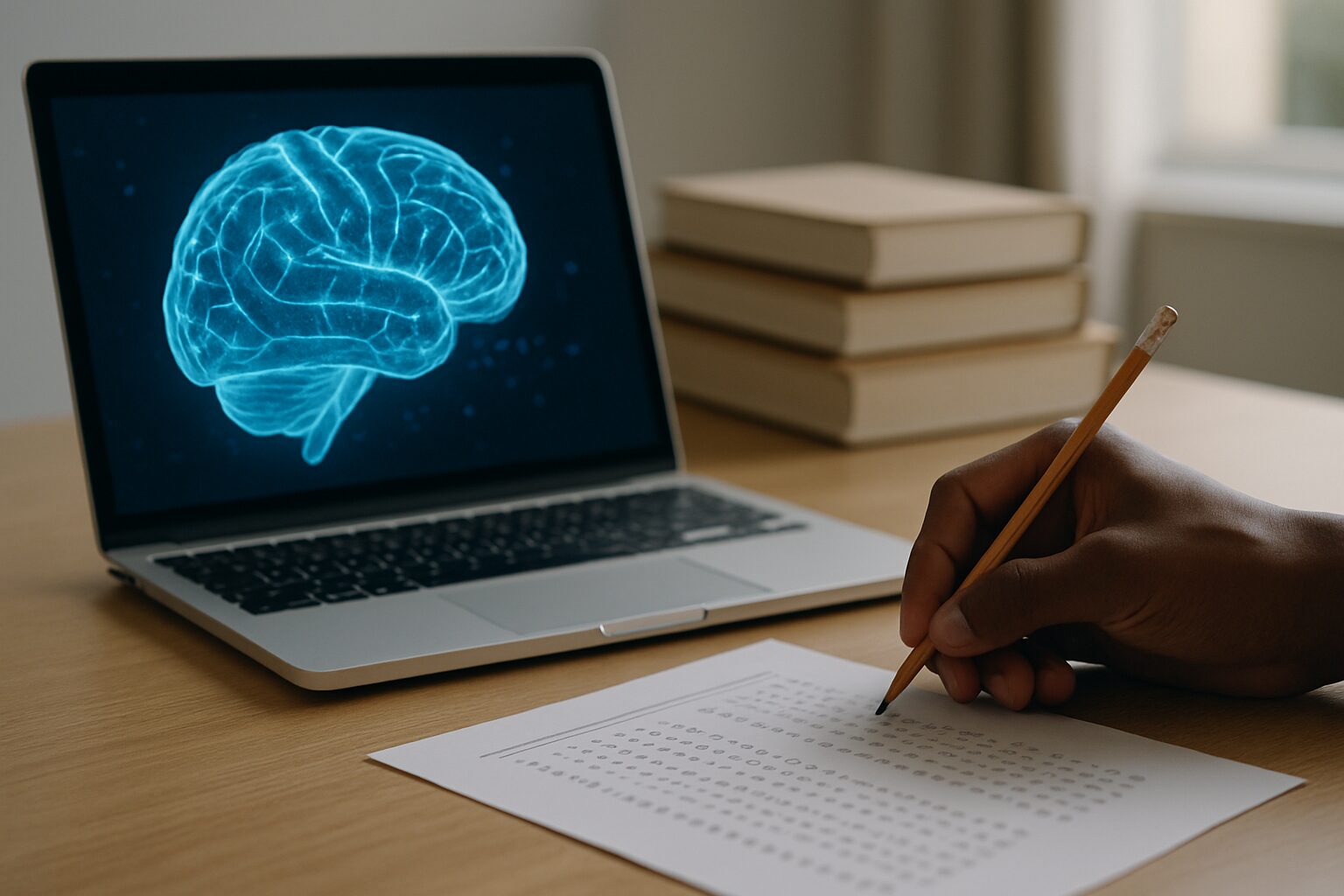
The Future of Exams: How Tech is Reshaping Education Assessment
The use of artificial intelligence in standardized testing raises ethical questions about fairness, transparency, and accessibility. AI systems may be employed to score exams, generate test questions, or even proctor students, but their algorithms can introduce biases or technical barriers. These challenges affect how assessments are administered and who has equal opportunity to succeed.
Why It Matters - Real-world impact
The implications of AI in standardized testing extend far beyond academic circles, affecting students, educators, and society at large. If AI systems are deployed without rigorous ethical oversight, they could perpetuate biases—such as favoring certain demographics over others—or create unrealistic performance expectations, exacerbating inequality in education. Students from underprivileged backgrounds may face disproportionate disadvantages if AI-driven assessments rely on data that doesn’t account for their unique circumstances. For regular people, this matters because standardized tests often determine access to opportunities like scholarships, college admissions, and even future careers. Flawed or unfair AI systems could deepen societal divides, making it critical to ensure these technologies are transparent, equitable, and accountable.
Ethical Concerns - What’s wrong or risky?
AI and Standardized Testing: Navigating Ethical Risks
The integration of artificial intelligence into standardized testing introduces several ethical concerns that educators, policymakers, and the public must address. These risks span issues of fairness, as AI systems may not account for diverse learning styles or socioeconomic backgrounds, potentially disadvantaging certain student groups. Similarly, concerns about discrimination arise when algorithms inadvertently perpetuate biases based on race, gender, or disability, leading to unequal outcomes.
Transparency and Accountability
A lack of transparency in how AI scores or evaluates responses can obscure the rationale behind results, making it difficult for students and educators to challenge or understand outcomes. This opacity may erode trust in the testing process and hinder educational growth.
Economic and Societal Impacts
Wider adoption of AI in testing could have significant economic impact, such as diverting resources from traditional teaching methods to technology infrastructure, potentially exacerbating inequities between well-funded and under-resourced schools. Some argue this shift might lead to job loss among educators or test administrators, though others believe it could create new roles focused on AI oversight.
Differing Perspectives
Not all stakeholders view these risks uniformly. Proponents highlight AI's potential to reduce human bias and provide consistent scoring, while critics worry about dehumanizing education and infringing on worker rights if educators' roles are diminished or altered without proper consultation. Additional moral concerns include data privacy, student autonomy, and the long-term effects of algorithm-driven assessments on critical thinking skills.
Solutions - What’s being done or proposed?
Implementing Bias Audits for AI Testing Tools
Some institutions have begun conducting regular bias audits on AI tools used in standardized testing. These audits involve analyzing the AI's decision-making processes to identify and mitigate any biases that may disadvantage certain student groups. For example, audits might examine whether the AI favors certain dialects or cultural references over others in language assessments. While not a perfect solution, these audits help ensure greater fairness in AI-driven evaluations.
Developing Transparent AI Algorithms
Researchers and developers are working to create more transparent AI algorithms for standardized testing. These algorithms are designed to provide clear explanations for their scoring decisions, allowing educators and students to understand how results are generated. Transparency helps build trust in AI systems and allows for better identification of potential flaws or biases in the testing process.
Establishing Ethical Guidelines for AI in Testing
Professional organizations and educational institutions have started developing ethical guidelines for the use of AI in standardized testing. These guidelines address issues such as data privacy, fairness, and accountability. They provide frameworks for responsible implementation of AI tools while protecting student rights and ensuring equitable access to educational opportunities.
Human-AI Hybrid Scoring Systems
Some testing organizations have implemented hybrid scoring systems that combine AI evaluation with human oversight. In these systems, AI handles initial scoring while human reviewers check a percentage of results and any borderline cases. This approach aims to maintain efficiency while reducing the risk of unfair outcomes due to algorithmic limitations or biases.
Diverse Training Data for AI Models
To address representation issues, developers are focusing on creating more diverse training datasets for AI testing tools. This involves collecting responses from students across different demographics, regions, and socioeconomic backgrounds. The goal is to ensure the AI can fairly evaluate responses from all student populations without systemic bias toward any particular group.
Student Opt-Out Options for AI Scoring
Some educational systems have introduced policies allowing students to opt out of AI-scored assessments in favor of human evaluation. While this solution presents logistical challenges and potential cost implications, it provides an important choice for students who may distrust AI systems or feel disadvantaged by them.
Continuous Monitoring and Feedback Systems
Institutions are implementing continuous monitoring systems to track the performance of AI testing tools over time. These systems collect feedback from educators and students about potential issues, allowing for ongoing improvements to the AI models. This approach recognizes that AI systems need regular updates to maintain fairness as language and educational standards evolve.
Examples and Real Cases
ChatGPT Used for College Admissions Essays
In 2023, universities reported a surge in AI-generated college application essays, with tools like ChatGPT enabling students to produce polished essays without original thought. The Common Application and Coalition Application platforms began exploring AI detection tools to maintain fairness in admissions.
AI-Graded Essays in Standardized Tests
In 2021, the Educational Testing Service (ETS) faced criticism when its AI scoring system for GRE essays was found to favor verbose responses over concise, well-argued ones. Critics argued this could disadvantage non-native English speakers who write more succinctly.
Hypothetical: AI-Powered Adaptive Testing Bias
A future scenario could involve AI-driven adaptive tests adjusting difficulty based on perceived student ability, but inadvertently reinforcing biases. For example, if the algorithm lowers difficulty for students from underfunded schools, it might limit their opportunity to demonstrate full potential.
Proctoriou2019s Remote Monitoring Controversy
During the COVID-19 pandemic, Proctoriou2019s AI-based remote proctoring software flagged students from certain backgrounds at higher rates for 'suspicious behavior.' In 2020, students at the University of British Columbia protested its use, citing privacy and bias concerns.
Hypothetical: AI Tutoring Disparities
If AI tutoring tools like Khanmigo (Khan Academyu2019s AI tutor) become widespread, wealthier districts might adopt them faster, widening the education gap. Students without access could fall further behind in standardized test performance.
Frequently Asked Questions
What is AI's role in standardized testing?
AI can help create, administer, and grade standardized tests more efficiently. It can also analyze test results to identify patterns and improve future tests, making the process faster and more accurate.
Why is AI important for standardized testing?
AI is important because it can reduce human bias, provide instant feedback, and personalize test questions based on a student's skill level. This makes testing fairer and more effective for diverse learners.
How does AI impact access to standardized testing?
AI can make standardized testing more accessible by offering adaptive tests for students with disabilities, providing translations for non-native speakers, and enabling remote testing for those in underserved areas.
What are the concerns about using AI in standardized testing?
Some concerns include data privacy, potential algorithmic bias, and over-reliance on technology. It's important to ensure AI tools are transparent and equitable for all test-takers.
How is AI currently used in standardized testing today?
Today, AI is used for automated essay scoring, adaptive testing (where questions adjust to a student's ability), and detecting cheating. Some tests also use AI to provide personalized study recommendations.