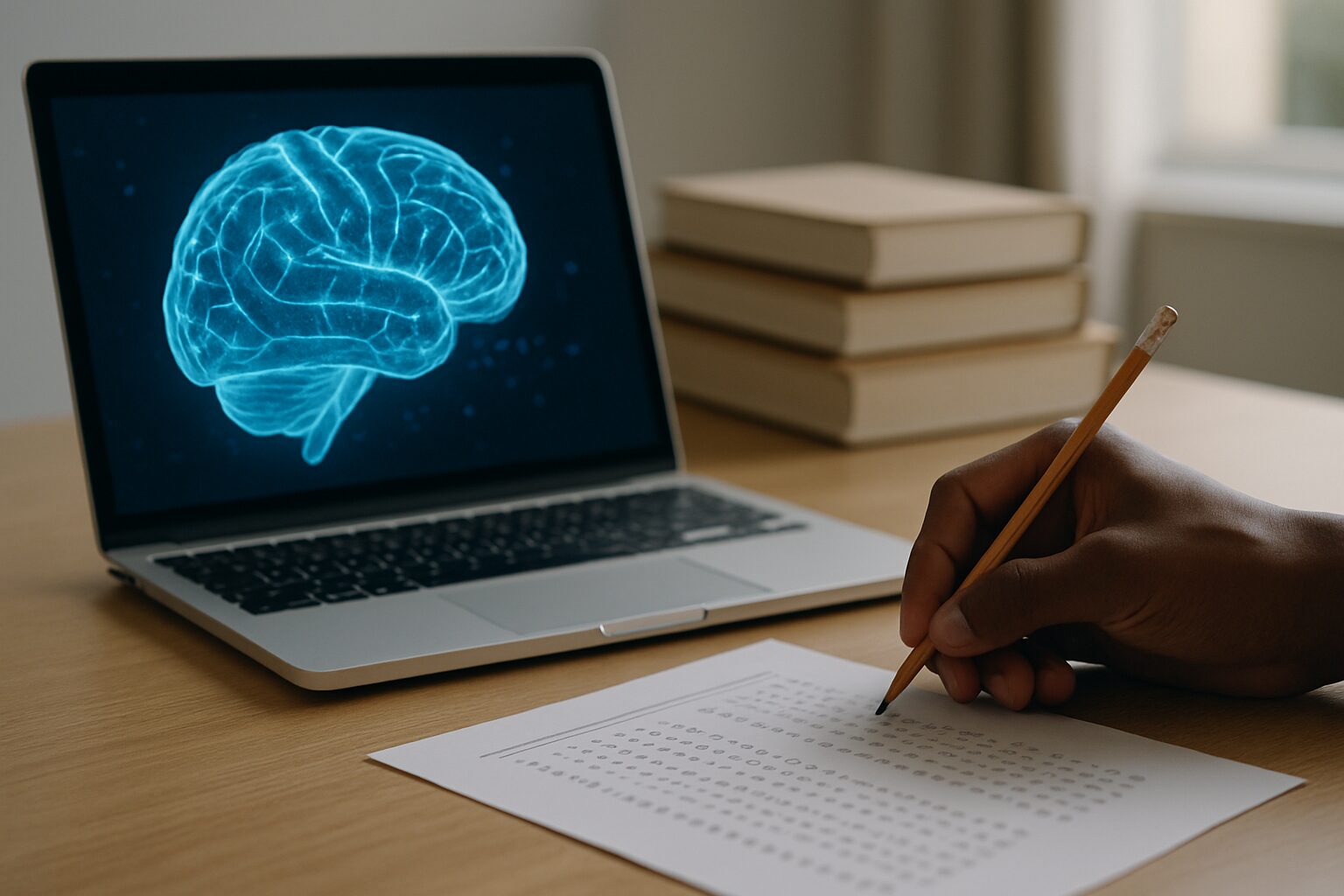
Revolutionizing Education: How Smart Tech is Transforming Exams
AI is increasingly being used in standardized testing, from scoring essays to generating test questions. This raises ethical questions about fairness, bias, and transparency in high-stakes assessments. As AI tools become more integrated into education systems, understanding their impact on access and equity is critical.
Why It Matters - Real-world impact
The integration of AI into standardized testing has far-reaching implications for students, educators, and society at large. If biased or flawed algorithms are used to evaluate performance, they could unfairly disadvantage marginalized groups, reinforcing existing inequalities in education. Teachers and schools may face pressure to "teach to the algorithm," narrowing curricula and stifling creativity. For students, AI-driven assessments could determine college admissions, scholarships, or career opportunities, making fairness and transparency critical. Regular people should care because these systems shape future generations' opportunities—potentially locking some out of success due to opaque or discriminatory design. The stakes are high, as unchecked AI in testing could deepen societal divides rather than bridge them.
Ethical Concerns - What’s wrong or risky?
Economic Impact
The integration of AI into standardized testing raises significant economic concerns, particularly regarding the cost of developing, implementing, and maintaining these systems. This could widen the gap between well-funded and under-resourced schools, potentially limiting access to quality education tools for disadvantaged communities.
Discrimination and Fairness
AI systems used in testing may inadvertently perpetuate or even amplify existing biases. If training data reflects historical inequalities, the AI could produce results that discriminate against certain demographic groups. Ensuring fairness in algorithmic decision-making is critical, as biased outcomes could affect students' educational and career trajectories.
Transparency
Many AI algorithms operate as "black boxes," making it difficult to understand how decisions are reached. This lack of transparency can be problematic in high-stakes testing environments, where students and educators need to trust and verify results. Without clear explanations, it becomes challenging to address errors or appeal unfair outcomes.
Job Loss
The automation of test scoring and proctoring through AI could lead to reduced roles for human educators and administrators, contributing to concerns about job loss in the education sector. While AI may increase efficiency, it also risks devaluing human expertise and judgment in assessing student performance.
Worker Rights
As AI takes on more responsibilities in education, issues related to worker rights emerge. Educators may face pressure to adapt to new technologies without adequate training or input, potentially undermining their professional autonomy and leading to unsatisfactory working conditions.
Differing Perspectives
Not all stakeholders view these risks uniformly. Proponents argue that AI can reduce human bias and increase efficiency, providing more objective assessments. Critics, however, worry about the erosion of human touch in education and the potential for systemic inequities to be hardcoded into AI systems. Balancing innovation with ethical safeguards remains a contentious and evolving debate.
Solutions - What’s being done or proposed?
Implementing Bias Audits for AI Testing Tools
One approach has been to conduct regular bias audits on AI systems used in standardized testing. These audits involve analyzing the AI's decision-making processes to identify and mitigate any biases that may disadvantage certain groups of students. By employing third-party auditors and using diverse datasets, institutions aim to ensure fairness and transparency in AI-driven assessments.
Developing Ethical Guidelines for AI in Education
Educational organizations and policymakers have proposed creating comprehensive ethical guidelines for the use of AI in standardized testing. These guidelines address issues such as data privacy, algorithmic transparency, and accountability. By setting clear standards, stakeholders hope to prevent misuse and ensure that AI tools are used equitably across different student populations.
Enhancing Human Oversight in AI Grading Systems
To counterbalance potential flaws in AI grading, some institutions have increased human oversight. This involves having educators review and, if necessary, override AI-generated scores. The hybrid approach aims to combine the efficiency of AI with the nuanced judgment of human teachers, reducing errors and fostering trust in the system.
Promoting AI Literacy Among Educators and Students
Efforts have been made to improve AI literacy so that educators and students can better understand how AI tools work in testing environments. Workshops, training programs, and resources are being developed to demystify AI algorithms, helping users recognize limitations and advocate for fair treatment. This empowerment is seen as key to ethical AI adoption in education.
Legislating Transparency in AI Testing Algorithms
Some advocates have pushed for legislation requiring transparency in AI algorithms used for standardized testing. Laws could mandate that companies disclose how their systems make decisions, allowing for independent verification of fairness. Such legal frameworks aim to hold developers accountable and ensure that AI tools do not perpetuate existing inequalities in education.
Creating Diverse Development Teams for AI Tools
To address bias at the source, there has been a push to diversify the teams that develop AI testing tools. By including individuals from varied backgrounds in the design process, the hope is to create more inclusive algorithms that account for different cultural and socioeconomic contexts. This solution focuses on preventing bias before it becomes embedded in the technology.
Establishing Redress Mechanisms for Affected Students
Institutions have suggested implementing redress mechanisms for students who believe they were unfairly evaluated by AI systems. These mechanisms could include appeals processes, additional human reviews, or alternative assessment options. Providing clear pathways for recourse helps protect students' rights and maintains confidence in the testing system.
Examples and Real Cases
ChatGPT Used for College Admissions Essays
In 2023, admissions officers reported a surge in college application essays suspected to be written by AI tools like ChatGPT. The University of Texas at Austin implemented AI detection software to identify generated content, raising concerns about false positives penalizing authentic applicants.
ETS Integrates AI Scoring for TOEFL
In 2021, Educational Testing Service (ETS) began using AI to score the TOEFL writing section alongside human graders. While intended to reduce bias, studies showed the AI system disproportionately flagged non-native English phrasing as errors, disadvantaging international test-takers.
Hypothetical: AI-Powered SAT Tutoring Widens Gap
A 2025 scenario where AI-powered SAT prep apps become prohibitively expensive, creating a two-tier system where only wealthy students can afford personalized algorithmic tutoring. This exacerbates existing score gaps along socioeconomic lines despite test content remaining identical.
Proctorio Facial Recognition Controversy
During 2020-2022 remote testing, Proctorio's AI proctoring software falsely flagged Black students for cheating at higher rates due to inadequate facial recognition training. Multiple universities faced lawsuits after students were wrongly accused of misconduct during high-stakes exams.
Hypothetical: AI-Generated Standardized Test Questions
A 2026 case where a testing company uses AI to generate all new SAT questions, but the algorithm unintentionally patterns questions after privileged cultural references. This results in depressed scores for rural and urban students unfamiliar with the references.
Frequently Asked Questions
What is AI's role in standardized testing?
AI helps create, score, and analyze standardized tests more efficiently. It can generate questions, grade essays, and provide insights into student performance, making the testing process faster and more accurate.
Why is AI important for standardized testing?
AI reduces human bias, speeds up grading, and personalizes feedback for students. It also helps identify learning gaps, making education more accessible and tailored to individual needs.
How does AI make standardized testing fairer?
AI can minimize grading inconsistencies and bias by using uniform criteria. It also adapts tests to different learning styles and needs, ensuring a more equitable assessment for all students.
Can AI replace teachers in standardized testing?
No, AI assists teachers by handling repetitive tasks like grading, but teachers still provide critical oversight, interpret results, and offer personalized support based on AI-generated data.
What are the risks of using AI in standardized testing?
Potential risks include data privacy concerns, over-reliance on technology, and algorithmic bias if not properly monitored. It's important to use AI responsibly and ensure human oversight.