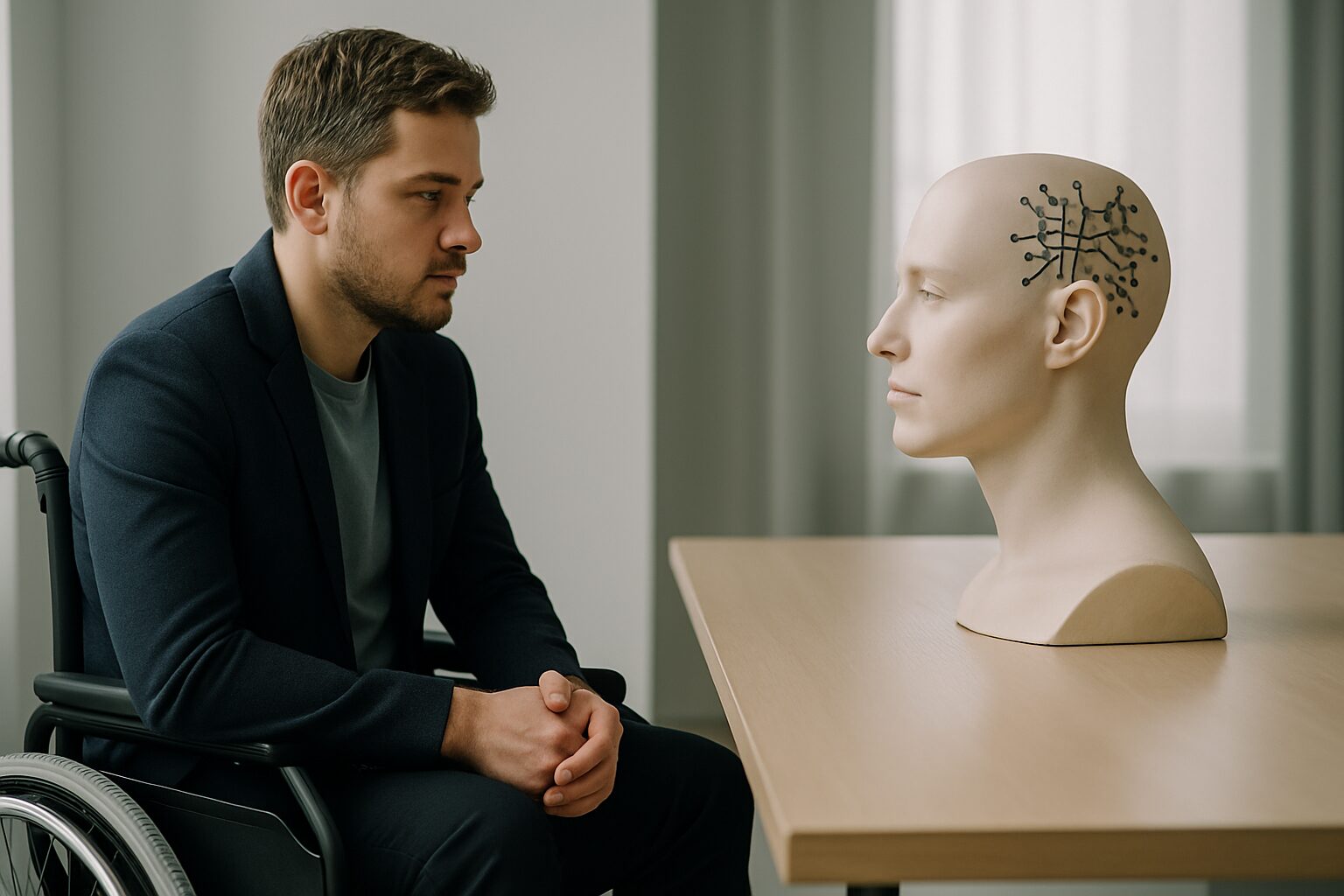
The Hidden Power of Emotion AI: Balancing Innovation and Privacy
Emotion recognition AI analyzes facial expressions, voice tones, or other cues to infer human emotions, often used in hiring, customer service, or surveillance. However, these systems can reinforce biases if trained on unrepresentative data, leading to inaccurate or unfair outcomes for certain demographics. The ethical concern lies in whether such technology can reliably and fairly interpret emotions across diverse cultures, genders, and individuals without perpetuating harm.
Why It Matters - Real-world impact
Emotion recognition AI has real-world consequences because it increasingly influences decisions in hiring, law enforcement, education, and mental health assessments. When these systems misread emotions—particularly among marginalized groups due to biased training data—they can reinforce discrimination, deny opportunities, or escalate unjust surveillance. For example, a job candidate perceived as "disengaged" by flawed AI analysis might be unfairly rejected, while students from certain cultural backgrounds could face undue scrutiny if their expressions are misinterpreted. Regular people should care because these technologies operate silently in critical systems, shaping lives without transparency or accountability. The stakes are high: unchecked emotion AI risks automating prejudice under the guise of objectivity.
Ethical Concerns - What’s wrong or risky?
Ethical Risks of Emotion Recognition AI
Emotion recognition AI poses significant ethical risks, particularly in the domain of fairness, as these systems often fail to account for cultural and individual differences in emotional expression. This can lead to systematic misclassification and unjust outcomes.
Discrimination and Bias
These technologies risk reinforcing existing biases, resulting in discrimination against marginalized groups whose emotional cues may not align with training data primarily sourced from Western, educated populations.
Transparency Issues
The lack of transparency in how algorithms interpret emotions makes it difficult for individuals to understand or challenge decisions, raising concerns about accountability and informed consent.
Economic and Employment Concerns
Widespread adoption could lead to significant job loss in sectors reliant on human emotional assessment, while also having a profound economic impact by shifting labor demands and creating new power imbalances.
Worker Rights
In workplace settings, emotion AI may infringe on worker rights by enabling constant surveillance and pressuring employees to conform to emotional standards, potentially eroding privacy and autonomy.
Differing Perspectives
Proponents argue that emotion AI can enhance human-computer interaction and improve services in healthcare or customer support, while critics emphasize the risks of dehumanization and the potential for these systems to be used manipulatively in advertising or social control.
Solutions - What’s being done or proposed?
Regulatory Frameworks and Legal Standards
Governments and regulatory bodies have proposed creating legal standards to govern the development and deployment of emotion recognition AI. These frameworks aim to ensure transparency, accountability, and fairness by requiring audits, bias assessments, and clear documentation of how these systems are trained and used. For example, the EU's AI Act includes provisions for high-risk AI systems, which could encompass emotion recognition technologies, mandating strict compliance with ethical guidelines.
Bias Mitigation in Training Data
Technical solutions focus on addressing biases in the datasets used to train emotion recognition AI. Researchers suggest diversifying training data to include a wide range of ethnicities, genders, and cultural expressions to reduce discriminatory outcomes. Techniques like data augmentation, adversarial debiasing, and fairness-aware algorithms are being explored to minimize bias and improve the accuracy of emotion detection across diverse populations, addressing issues such as training data bias.
Transparency and Explainability
To build trust and ensure accountability, developers are encouraged to make emotion recognition AI systems more transparent and explainable. This involves providing clear information about how the system works, what data it uses, and how decisions are made. Tools like model interpretability frameworks and user-friendly documentation can help stakeholders understand and scrutinize the technology, reducing the risk of misuse or unintended harm, and aligning with transparency best practices.
Ethical Review Boards and Oversight
Institutions and organizations are establishing ethical review boards to oversee the deployment of emotion recognition AI. These boards evaluate the potential societal impacts, ethical implications, and fairness of such technologies before they are implemented. By involving multidisciplinary experts, including ethicists, psychologists, and community representatives, these boards aim to ensure that emotion recognition AI aligns with societal values and human rights.
Public Awareness and Education
Social solutions include raising public awareness about the capabilities and limitations of emotion recognition AI. Educational campaigns and workshops can inform users about how these systems work, their potential biases, and the ethical concerns they raise. Empowering individuals with knowledge helps them critically assess the technology and advocate for responsible use, fostering a more informed and engaged society, and addressing ethical debates.
Industry Self-Regulation and Best Practices
Some companies and industry groups are adopting self-regulatory measures to promote ethical use of emotion recognition AI. This includes developing best practices, codes of conduct, and certification programs to ensure compliance with ethical standards. By voluntarily adhering to these guidelines, organizations can demonstrate their commitment to fairness and accountability, even in the absence of strict legal requirements, and align with governance frameworks.
Examples and Real Cases
HireVue's AI-Powered Emotion Recognition in Hiring (2019)
In 2019, HireVue used AI to analyze facial expressions and tone of voice in job interviews, claiming it could assess candidates' emotional states. Critics argued the system was biased against people with disabilities or from different cultural backgrounds, as it couldn't account for diverse emotional expressions.
China's Emotion Recognition in Uyghur Surveillance (2020)
Chinese authorities deployed emotion recognition AI to monitor Uyghur Muslims in Xinjiang, flagging 'suspicious' emotional responses. Human rights groups condemned this as racially biased targeting, as the systems were trained primarily on Han Chinese facial expressions.
Amazon's Emotion Recognition Gender Bias (2018 Study)
A 2018 MIT study found Amazon's Rekognition system showed gender bias, labeling women's angry expressions as 'happy' 19% more often than men's. The system also struggled to correctly identify darker-skinned women's emotions.
Hypothetical: Classroom Emotion Monitoring
A school district implements AI to detect student engagement via facial analysis, but the system misinterprets neurodivergent students' expressions as disinterest. This leads to unfair academic evaluations for students with autism or ADHD whose emotional expressions differ from neurotypical norms.
Microsoft's Facial Recognition API Withdrawal (2022)
Microsoft retired its emotion recognition API in 2022 after research showed the technology couldn't reliably map facial expressions to emotional states across cultures. The company acknowledged the potential for bias and misuse in sensitive applications like hiring or policing.
Frequently Asked Questions
What is emotion recognition AI and how does it work?
Emotion recognition AI is a technology that uses algorithms to analyze facial expressions, voice tones, or body language to identify human emotions like happiness, anger, or sadness. It works by training on large datasets of labeled emotional expressions, but biases in these datasets can lead to unfair or inaccurate results.
Why is bias in emotion recognition AI a big concern?
Bias in emotion recognition AI is concerning because it may misread emotions differently across genders, races, or cultures. For example, some systems struggle to accurately recognize emotions in people with darker skin tones or from non-Western cultures, leading to unfair treatment in hiring, policing, or customer service.
How can emotion recognition AI be made more fair?
To improve fairness, developers should use diverse training datasets that include people of different races, genders, and cultural backgrounds. Regular audits, transparency in how the AI makes decisions, and involving ethicists in the design process can also help reduce bias.
Where is emotion recognition AI used today, and what are the risks?
This technology is used in job interviews, advertising, mental health apps, and even surveillance. The risks include privacy violations, misjudging emotions leading to wrong decisions, and reinforcing stereotypes if the AI is biased against certain groups.
What can we learn from past mistakes in emotion recognition AI?
Past mistakes show that relying on limited or biased data can harm marginalized groups. For example, some AI systems labeled Black individuals as 'angry' more often due to flawed training. These errors teach us the importance of inclusive design and ongoing testing for fairness.