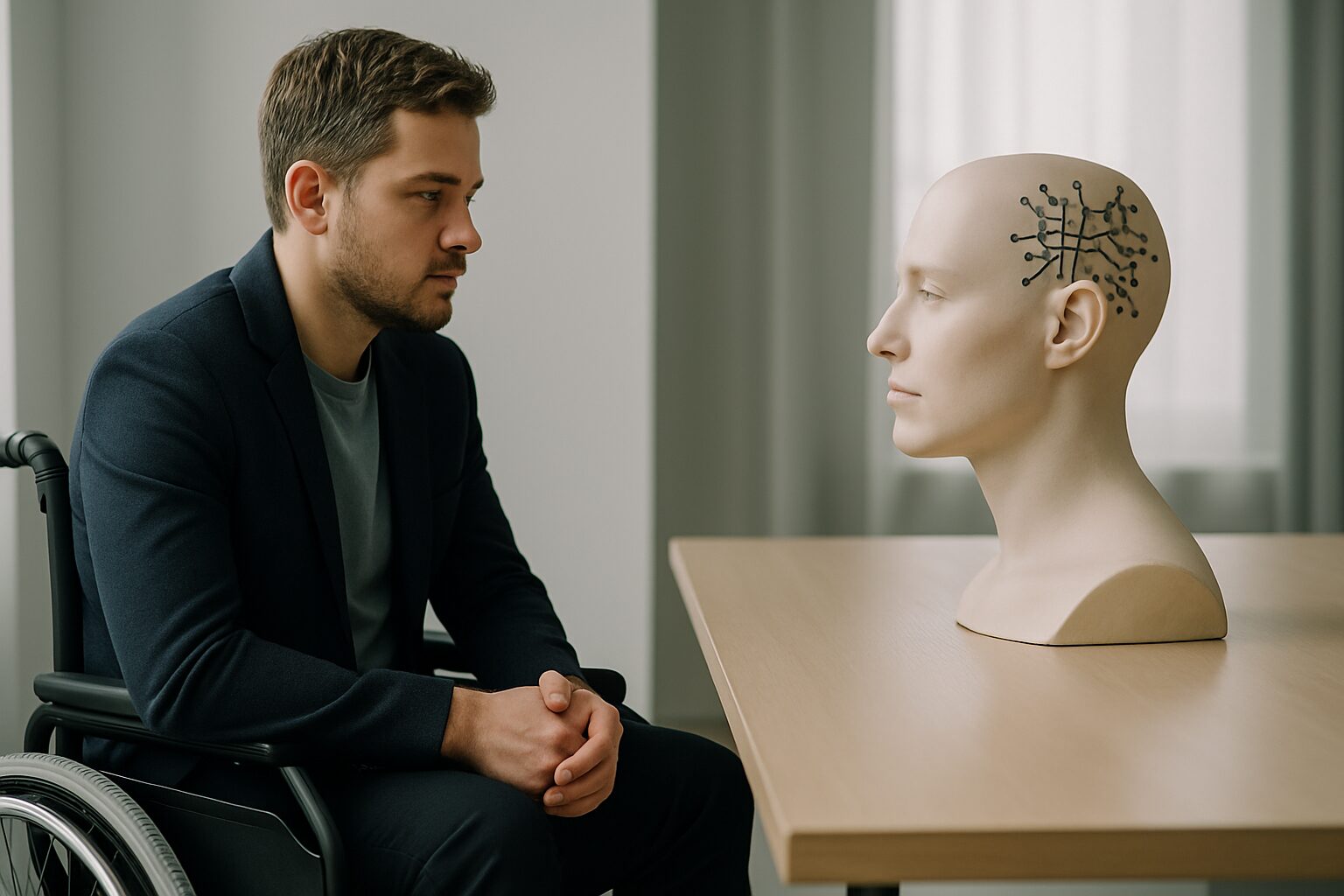
The Hidden Dangers of Emotion AI: Should We Trust Machines to Read Feelings?
Emotion recognition AI analyzes facial expressions, voice tones, or other cues to infer human emotions, raising ethical concerns about bias and fairness. These systems often rely on datasets and algorithms that may not account for cultural, gender, or individual differences, leading to inaccurate or discriminatory outcomes. The debate centers on whether such technology can be developed and deployed responsibly without reinforcing harmful stereotypes or violating privacy.
Why It Matters - Real-world impact
Emotion recognition AI has real-world implications that extend far beyond theoretical debates. This technology is increasingly used in hiring, law enforcement, education, and customer service, where flawed interpretations of emotions can lead to discriminatory outcomes. Marginalized communities are particularly vulnerable, as biases in training data often misread expressions across cultures, genders, or neurodivergent individuals. Errors can result in unjust job rejections, heightened surveillance, or misdiagnoses in mental health contexts. For everyday people, the normalization of such systems risks eroding privacy and autonomy, as emotions—fundamentally human and complex—are reduced to algorithmic judgments. Without scrutiny, these tools may reinforce existing inequalities under the guise of objectivity.
Ethical Concerns - What’s wrong or risky?
Ethical Risks in Emotion Recognition AI
Emotion recognition AI systems, which claim to infer human emotions from facial expressions, voice patterns, or physiological signals, raise significant ethical concerns. These systems are often deployed in contexts like hiring, law enforcement, customer service, and education, where their potential for harm is substantial.
Fairness
One of the most pressing issues is fairness. Emotion recognition algorithms are typically trained on datasets that may not represent the full diversity of human expressions across cultures, genders, ages, or individuals with disabilities. This can lead to systems that are less accurate or entirely ineffective for certain groups, perpetuating existing inequalities.
Discrimination
Closely related is the risk of discrimination. If an AI system misinterprets emotions based on biased data, it could unfairly deny opportunities—such as jobs or loans—to marginalized communities. For example, a system might misread neutral expressions in some cultural contexts as negative, affecting outcomes in high-stakes scenarios.
Transparency
Another critical concern is transparency. Many emotion recognition systems operate as "black boxes," making it difficult to understand how they arrive at their conclusions. This lack of explainability undermines accountability, especially when decisions based on these systems have serious consequences for individuals.
Worker Rights
In workplace settings, emotion recognition AI can infringe on worker rights. Continuous monitoring of employees' emotional states may create a stressful environment, invade privacy, and be used to penalize workers unjustly, such as by tying emotional metrics to performance reviews or promotions.
Economic Impact
The widespread adoption of emotion AI could also have a profound economic impact. While it might create new tech jobs, it could also displace workers in roles where emotional interpretation is key, such as in mental health or human resources, potentially exacerbating economic disparities.
Job Loss
Similarly, concerns about job loss arise if AI systems replace human judgment in fields reliant on emotional intelligence. This could lead to reduced employment opportunities and devalue skills that have traditionally been human strengths.
Differing Perspectives
Not all stakeholders view these risks uniformly. Proponents argue that emotion recognition AI can reduce human bias by providing objective assessments, improve mental health support, and enhance user experiences in technology. They may emphasize the potential for these systems to be refined and made more equitable over time. Critics, however, caution against the premature deployment of such technologies without robust ethical safeguards, highlighting the irreducibility of human emotion to algorithmic interpretation and the dangers of encoded prejudice.
Other moral concerns include privacy violations, as these systems often require collecting sensitive biometric data, and the potential for emotional manipulation in advertising or political campaigns. The ethical landscape remains complex and contested, urging careful consideration of both innovation and responsibility.
Solutions - What’s being done or proposed?
Regulatory Frameworks and Legal Standards
Governments and international bodies have proposed creating regulatory frameworks to oversee the development and deployment of emotion recognition AI. These frameworks aim to establish legal standards for accuracy, transparency, and consent, ensuring that such technologies are used ethically. For example, the EU's AI Act includes provisions for high-risk AI systems, which could encompass emotion recognition technologies, requiring rigorous testing and documentation to mitigate bias and protect privacy.
Bias Mitigation Through Diverse Training Data
Technical solutions have focused on improving the diversity and representativeness of training datasets to reduce bias in emotion recognition AI. Researchers advocate for datasets that include a wide range of ethnicities, genders, ages, and cultural backgrounds to ensure the AI performs equitably across different groups. Additionally, techniques like adversarial debiasing and fairness-aware algorithms are being explored to further minimize discriminatory outcomes.
Transparency and Explainability in AI Systems
To address concerns about opacity in AI decision-making, developers are working on making emotion recognition systems more transparent and explainable. This involves creating models that provide clear explanations for their predictions, allowing users to understand how emotions are being interpreted. Tools like SHAP (SHapley Additive exPlanations) and LIME (Local Interpretable Model-agnostic Explanations) are being used to enhance interpretability and build trust in these systems.
Ethical Review Boards and Oversight Committees
Institutions and organizations are establishing ethical review boards and oversight committees to evaluate the use of emotion recognition AI. These bodies assess the potential societal impacts, ethical implications, and fairness of deploying such technologies. By involving multidisciplinary teams, including ethicists, psychologists, and community representatives, they aim to ensure that emotion recognition AI aligns with societal values and does not perpetuate harm.
Public Awareness and Education Campaigns
Social solutions include public awareness and education campaigns to inform individuals about the capabilities and limitations of emotion recognition AI. By increasing understanding, these initiatives aim to empower people to critically assess the technology's use and advocate for their rights. Workshops, online resources, and community discussions are being utilized to foster dialogue and ensure that the public's voice is included in the ethical debate surrounding these systems.
Consent-Based Deployment and Opt-Out Mechanisms
To respect individual autonomy, some advocates suggest implementing strict consent-based deployment models for emotion recognition AI. This means users must explicitly opt in before their emotional data is collected or analyzed. Additionally, clear opt-out mechanisms are proposed to allow individuals to withdraw consent at any time, ensuring they retain control over their personal information and how it is used.
Examples and Real Cases
HireVue's Emotion Recognition in Job Interviews (2019)
In 2019, HireVue used AI to analyze facial expressions and tone of voice in job interviews, claiming it could assess candidates' emotional states. Critics argued the system was biased against people with disabilities or different cultural expressions, leading to unfair hiring practices.
China's Classroom Surveillance (2020)
In 2020, reports revealed Chinese schools using emotion recognition AI to monitor students' engagement by analyzing facial expressions. The system often misread emotions, especially among neurodiverse students, raising concerns about privacy and psychological impact.
Microsoft's Affectiva in Customer Service (Hypothetical)
A hypothetical scenario: In 2022, Microsoft integrated Affectiva's emotion recognition into customer service chatbots. The AI frequently misinterpreted frustration in women and non-native speakers as politeness, delaying escalations and worsening service for these groups.
Rite Aid's Facial Recognition in Stores (2020)
Rite Aid deployed emotion recognition AI in stores to detect 'suspicious' behavior, disproportionately flagging Black and Latino shoppers. The system's bias led to increased surveillance and wrongful accusations in minority neighborhoods before being discontinued in 2020.
Unilever's AI Recruitment Tool (2016-2019)
Unilever used an AI tool to analyze candidates' facial expressions and word choices in video interviews. The system favored candidates with exaggerated expressions, disadvantaging those from cultures where subdued emotions are the norm, until it was phased out in 2019.
Frequently Asked Questions
What is emotion recognition AI and why is it controversial?
Emotion recognition AI is technology that analyzes facial expressions, voice tones, or body language to identify human emotions. It's controversial because it may misread emotions across cultures, genders, or individuals with disabilities, leading to biased or unfair outcomes.
How can emotion recognition AI be biased?
Emotion recognition AI can be biased if trained mostly on data from one demographic group (e.g., white males), causing it to misinterpret emotions in women, people of color, or those with neurodivergent conditions like autism, reinforcing stereotypes.
Why is fairness important in emotion recognition AI?
Fairness is crucial because unfair AI could wrongly judge job candidates, students, or suspects in legal settings based on flawed emotion readings, harming opportunities for marginalized groups and perpetuating discrimination.
What are real-world examples of emotion recognition AI causing problems?
Examples include hiring tools rejecting candidates for 'not smiling enough,' or surveillance systems flagging innocent people as 'suspicious' due to cultural differences in emotional expression, leading to unjust outcomes.
How can we make emotion recognition AI more ethical?
By using diverse training data, testing for bias across groups, allowing human oversight, and being transparent about limitationsu2014recognizing that emotions are complex and can't be fully reduced to AI analysis.