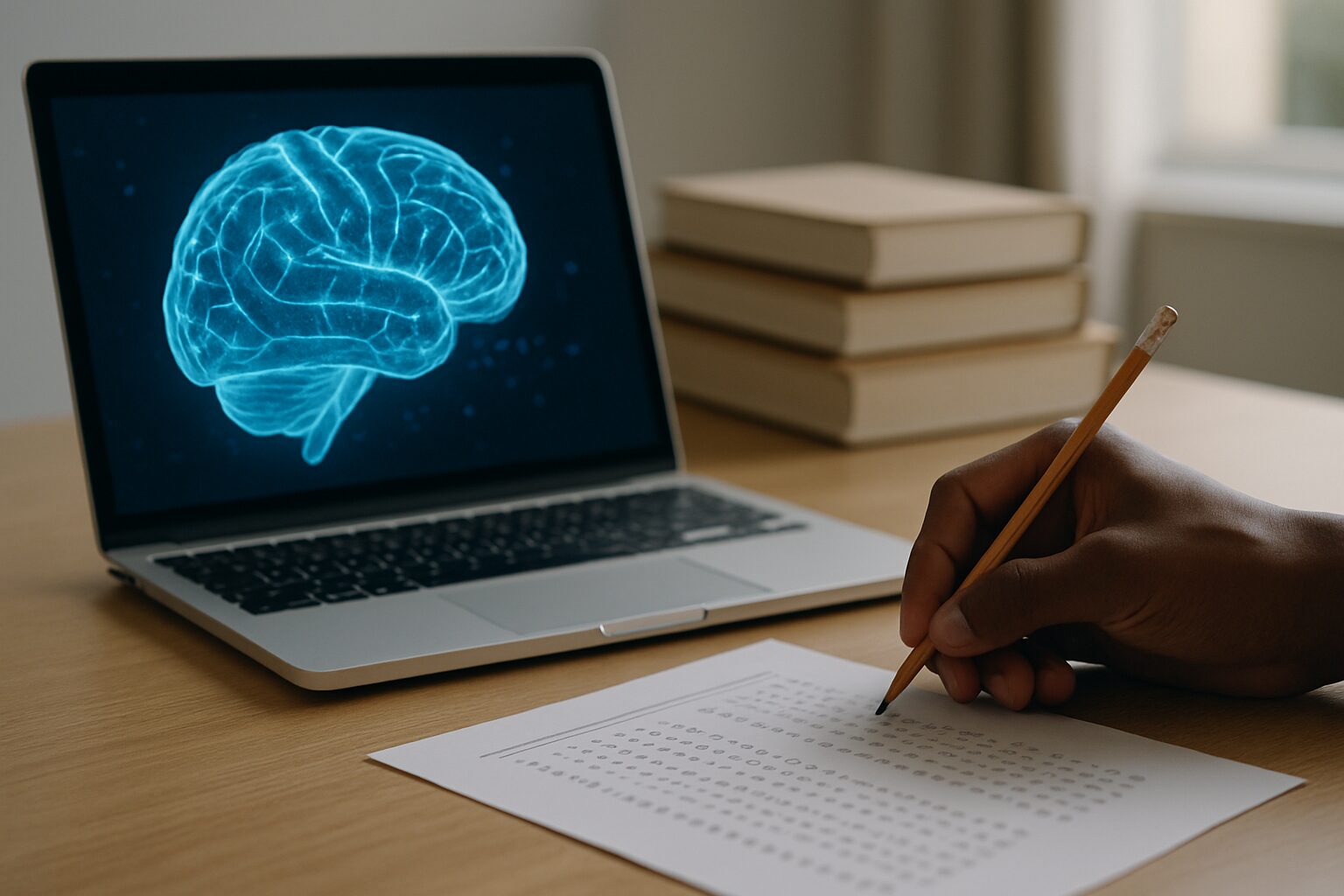
The Future of AI Tutors: Balancing Innovation and Social Responsibility
AI tutors are increasingly used in education, offering personalized learning and wider access to knowledge. However, their adoption raises ethical questions about fairness, bias, and the role of human educators. Concerns also include data privacy, algorithmic transparency, and the long-term societal impact of relying on AI for learning. These issues require careful consideration to ensure AI tutors benefit all students without reinforcing inequalities.
Why It Matters - Real-world impact
The ethics of AI tutors matter because they directly impact education, equity, and societal development. Students, educators, and marginalized communities are particularly affected—AI-driven learning tools could either bridge gaps in access or exacerbate inequalities, depending on how they're designed and deployed. Without ethical oversight, biases in algorithms might reinforce discrimination, while over-reliance on AI could erode human mentorship and critical thinking skills. Regular people should care because these systems shape future generations' knowledge, opportunities, and values. The stakes are high: unchecked AI in education could deepen societal divides or, if guided ethically, help create a fairer foundation for lifelong learning.
Ethical Concerns - What’s wrong or risky?
Economic Impact of AI Tutors
AI tutors could widen the educational divide by making high-quality tutoring accessible only to those who can afford it, raising ethical concerns about economic impact. This may exacerbate existing inequalities in education.
Discrimination in AI Tutoring Systems
If AI tutors are trained on biased data, they may inadvertently reinforce stereotypes or provide unequal support to students from different backgrounds. This ties directly into ethical concerns about discrimination in automated systems.
Fairness in Educational Outcomes
AI tutors might favor certain learning styles or cultural contexts, disadvantaging students who don’t fit the mold. Ensuring fairness in how these systems adapt to diverse learners is a critical challenge.
Transparency of AI Decisions
When an AI tutor makes a recommendation or assessment, students and educators deserve to understand why. Lack of transparency can lead to mistrust and reduce the effectiveness of AI as an educational tool.
Job Loss for Human Educators
Some argue that AI tutors could replace human teachers, especially in underfunded schools, leading to significant job loss in the education sector. Others counter that AI will augment rather than replace human educators.
Worker Rights in the AI Era
As educational institutions adopt AI tutors, there may be implications for worker rights, such as fair wages and job security for tutoring staff. Unions and educators are divided on whether AI represents a threat or an opportunity.
Privacy and Data Security
AI tutors collect vast amounts of data on students’ learning habits, raising concerns about how this information is stored, used, and protected. Unauthorized access or misuse could have serious consequences for student privacy.
Accountability for Errors
If an AI tutor provides incorrect information or harmful advice, it’s unclear who should be held responsible—the developers, the school, or the platform hosting the AI. This ambiguity challenges traditional notions of accountability in education.
Dependence on Technology
Over-reliance on AI tutors might diminish critical thinking and problem-solving skills, as students may become accustomed to receiving instant answers rather than engaging deeply with material.
Cultural and Linguistic Bias
AI systems often perform best in dominant languages and cultural contexts, potentially marginalizing students who speak minority languages or come from non-Western educational traditions.
Solutions - What’s being done or proposed?
Implementing Strict Data Privacy Regulations
Governments and organizations have proposed enforcing strict data privacy laws to protect students using AI tutors. These regulations would mandate transparency in how student data is collected, stored, and used, ensuring compliance with standards like GDPR or COPPA. By holding AI developers accountable, these measures aim to prevent misuse of sensitive educational data.
Developing Bias Auditing Tools
Technical solutions include creating tools to audit AI tutors for biases in content delivery, language, or recommendations. Researchers and developers are working on frameworks that regularly scan AI systems for discriminatory patterns, ensuring fairness across diverse student populations. These tools help identify and mitigate biases before they impact learners.
Promoting Digital Literacy Programs
Educational institutions and nonprofits have launched digital literacy initiatives to help students and educators critically engage with AI tutors. These programs teach users to recognize algorithmic biases, understand data privacy risks, and use AI tools responsibly. By fostering informed usage, they empower stakeholders to navigate AI-driven education ethically.
Establishing Ethical Review Boards
Some schools and companies have formed ethical review boards to oversee AI tutor deployments. These multidisciplinary teams evaluate the societal impact, equity, and transparency of AI systems before implementation. Their oversight ensures alignment with ethical standards and addresses concerns from educators, parents, and students.
Encouraging Open-Source AI Models
Advocates suggest open-sourcing AI tutoring algorithms to allow independent scrutiny and community-driven improvements. Transparent models enable researchers to verify fairness, accuracy, and security, reducing risks of proprietary systems operating as 'black boxes.' This approach fosters collaboration and trust in AI educational tools.
Creating Subsidized Access Programs
To address inequities in AI tutor access, policymakers and NGOs have proposed subsidized programs for underfunded schools. These initiatives provide affordable or free AI tools to low-income students, bridging the digital divide. Coupled with infrastructure support, they aim to democratize access to advanced educational technology.
Examples and Real Cases
Khanmigo's AI Tutoring by Khan Academy (2023)
In 2023, Khan Academy launched Khanmigo, an AI tutor designed to assist students with personalized learning. Critics raised concerns about data privacy and the potential for AI to replace human teachers, sparking debates on ethical boundaries in educational AI.
Duolingo's AI Language Coach (2022)
Duolingo integrated OpenAI's GPT-4 in 2022 to create an AI language tutor, offering real-time feedback. While praised for accessibility, some users reported instances of biased or incorrect responses, highlighting risks of over-reliance on AI for education.
Hypothetical: AI Tutor Reinforcing Stereotypes
Imagine an AI tutor in a low-income school district inadvertently steering female students away from STEM fields due to biased training data. This scenario underscores the need for rigorous ethical audits in AI educational tools.
Chinau2019s AI-Powered u2018Smart Classroomu2019 Initiative (2021)
China deployed AI tutors in classrooms nationwide as part of its 2021 u2018Smart Educationu2019 policy. While it improved rural access, concerns arose about state surveillance and the suppression of critical thinking through standardized AI curricula.
Hypothetical: AI Tutoring Widening the Digital Divide
If premium AI tutors become subscription-based, wealthier students could gain unfair advantages, exacerbating educational inequality. This hypothetical illustrates the ethical imperative for equitable AI access in education.
Frequently Asked Questions
What is an AI tutor and how does it work?
An AI tutor is a digital system that uses artificial intelligence to provide personalized learning experiences. It works by analyzing student responses, adapting to their learning pace, and offering tailored explanations or resources to help them understand concepts, similar to a human tutor but powered by algorithms.
Why is the ethics of AI tutors important in education?
Ethics in AI tutors is crucial because these systems influence how students learn and interact with information. Issues like data privacy, bias in algorithms, and equitable access must be addressed to ensure AI tutors benefit all learners fairly and don't reinforce existing inequalities in education.
Can AI tutors replace human teachers?
No, AI tutors are designed to assist, not replace, human teachers. While they can personalize learning and provide instant feedback, human educators offer emotional support, mentorship, and complex critical thinking guidance that AI cannot replicate. The best outcomes come from combining both.
How do AI tutors impact access to education?
AI tutors can improve access by providing affordable or free learning support to students in remote areas or underserved communities. However, if not designed inclusively, they may also widen gaps due to factors like lack of internet access or device availability, making ethical design essential.
What are the risks of using AI tutors in schools?
Risks include potential biases in AI algorithms that could disadvantage certain student groups, over-reliance on technology reducing human interaction, and data privacy concerns if student information is mishandled. Proper oversight and transparency are needed to mitigate these risks.