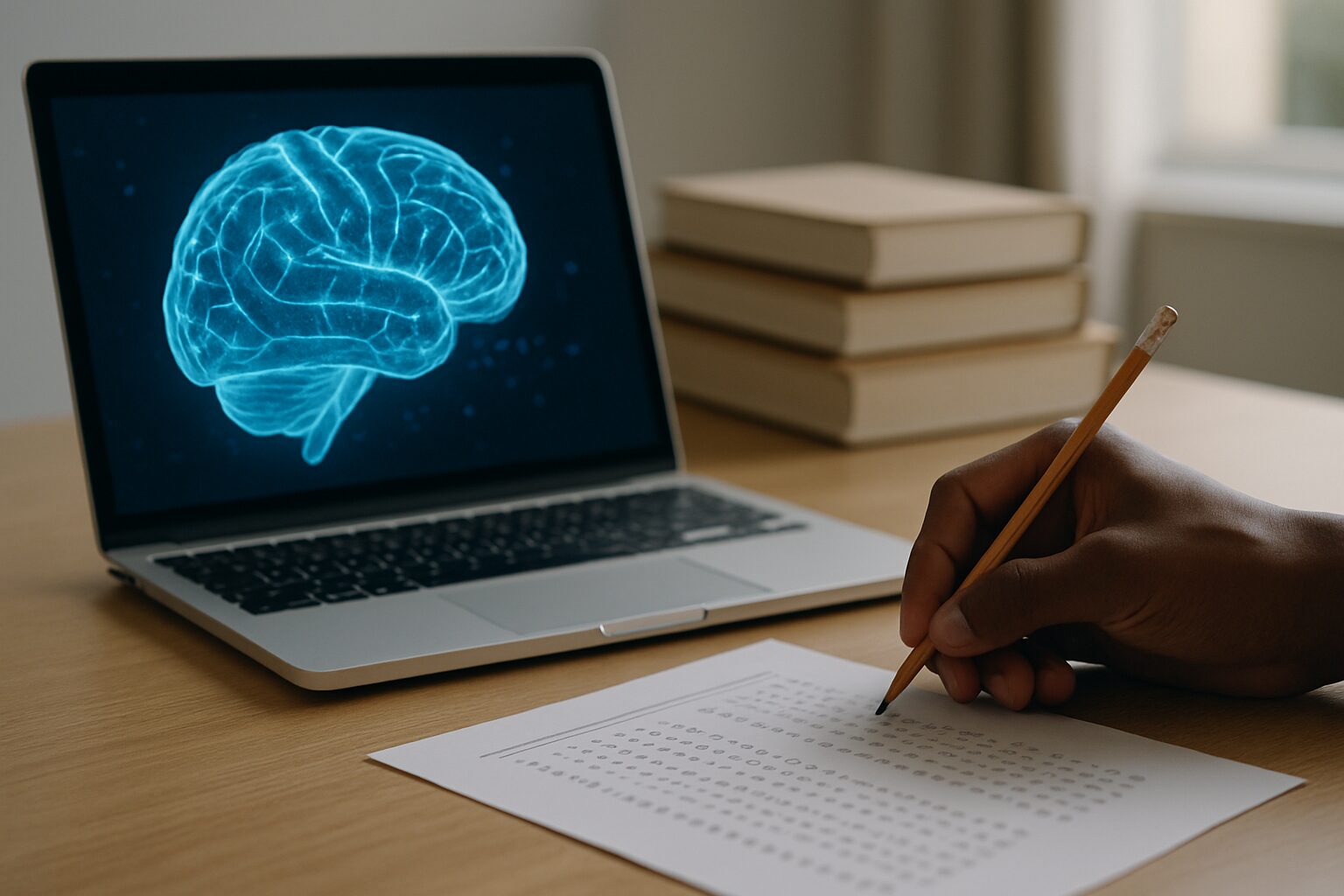
The Future of AI Tutors: Balancing Innovation and Responsible Regulation
AI tutors are increasingly used in education, offering personalized learning and wider access to resources. Their deployment raises ethical questions about data privacy, algorithmic bias, and the potential replacement of human educators. Regulation is needed to ensure these tools are fair, transparent, and used responsibly without widening existing inequalities in education.
Why It Matters - Real-world impact
The ethics of AI tutors and their regulation matter profoundly because these systems increasingly shape how students learn—and what they learn. Students, educators, and parents are directly affected, as unchecked AI could reinforce biases, provide inaccurate information, or erode privacy through data collection. Without proper oversight, AI tutors might widen educational disparities, favoring well-funded schools while leaving underprivileged students with substandard or even harmful tools. Regular people should care because these technologies influence future generations' skills, values, and opportunities, ultimately shaping societal equity and progress. The stakes are high: poor implementation could undermine trust in education itself.
Ethical Concerns - What’s wrong or risky?
Ethical Risks of AI Tutors
AI tutors present several ethical challenges that must be addressed to ensure responsible deployment. One major concern is fairness, as algorithms may inadvertently favor certain learning styles or cultural backgrounds, disadvantaging others. Similarly, issues of discrimination can arise if AI systems perpetuate biases present in their training data, leading to unequal educational outcomes based on race, gender, or socioeconomic status.
Transparency and Accountability
Another critical issue is transparency. Many AI tutoring systems operate as "black boxes," making it difficult for educators, students, and parents to understand how decisions or recommendations are made. This lack of clarity can hinder accountability and trust, especially when errors occur.
Economic and Labor Implications
AI tutors also raise concerns about economic impact and job loss, as their adoption could reduce the demand for human educators, particularly in underfunded schools. This ties into broader worker rights issues, such as how remaining educational staff are trained, compensated, or given agency over AI tools.
Differing Perspectives
Not all stakeholders view these risks uniformly. Some argue that AI tutors can democratize education by providing personalized support at scale, potentially mitigating human biases. Others caution that over-reliance on AI could devalue the human elements of teaching, such as empathy and mentorship, and exacerbate existing inequalities if access is uneven.
Additional moral concerns include data privacy, as AI tutors often collect sensitive information about students, and the potential for reduced critical thinking if systems prioritize efficiency over deep learning. Balancing innovation with ethical safeguards remains a key challenge for regulators and educators alike.
Solutions - What’s being done or proposed?
Government Regulation and Policy Frameworks
Several governments and regulatory bodies have proposed or implemented policies to oversee AI tutors. These include setting standards for data privacy, ensuring transparency in AI decision-making, and requiring audits for bias and fairness. For example, the EU's AI Act categorizes educational AI under 'high-risk' applications, mandating strict compliance with ethical guidelines. Such frameworks aim to protect students while fostering innovation.
Transparency and Explainability in AI Systems
Technical solutions have been developed to make AI tutors more transparent. This includes creating algorithms that provide explanations for their recommendations or decisions, allowing educators and students to understand how conclusions are reached. Tools like LIME (Local Interpretable Model-agnostic Explanations) and SHAP (SHapley Additive exPlanations) are being integrated into AI tutoring systems to enhance trust and accountability.
Ethical AI Certification Programs
Institutions and organizations have introduced certification programs to validate the ethical design and deployment of AI tutors. These programs assess factors such as bias mitigation, data security, and pedagogical effectiveness. For instance, the IEEE's Ethically Aligned Design certification encourages developers to adhere to ethical principles, providing a benchmark for trustworthy AI in education.
Community and Stakeholder Engagement
Engaging educators, students, parents, and ethicists in the development process has been suggested as a way to ensure AI tutors meet societal needs. Workshops, focus groups, and public consultations help identify potential ethical concerns and gather diverse perspectives. This participatory approach ensures that AI tools are aligned with educational values and cultural contexts.
Bias Detection and Mitigation Tools
Technical teams have developed tools to detect and reduce bias in AI tutoring systems. These include fairness-aware algorithms that regularly scan for discriminatory patterns in data or outcomes. For example, IBM's AI Fairness 360 toolkit provides metrics and methods to evaluate and address bias, helping developers create more equitable AI tutors.
Teacher-AI Collaboration Models
Rather than replacing teachers, some solutions propose collaborative models where AI tutors assist educators by handling repetitive tasks or providing personalized insights. This approach emphasizes human oversight, ensuring that ethical judgments and nuanced educational decisions remain in the hands of trained professionals. Pilot programs in schools have shown promising results in balancing efficiency with ethical responsibility.
Student Data Privacy Protections
Stronger data privacy measures, such as encryption, anonymization, and strict access controls, have been implemented to safeguard student information. Regulations like GDPR and COPPA set legal standards, while technical solutions like federated learning allow AI tutors to operate without centralized data storage, reducing privacy risks. Schools and developers are increasingly adopting these practices to build trust with users.
Examples and Real Cases
Khan Academy's AI Tutor Pilot (2023)
In 2023, Khan Academy launched an AI tutor pilot named Khanmigo, which raised concerns about data privacy and bias in personalized learning. Critics highlighted risks of algorithmic bias in recommendations, especially for marginalized student groups.
China's AI Education Crackdown (2021)
In 2021, China banned for-profit AI tutoring platforms like Yuanfudao and Zuoyebang, citing unethical data collection and exacerbating educational inequality. The regulation aimed to prevent AI from deepening disparities between urban and rural students.
Hypothetical: AI Tutor Misgrading Incident
A hypothetical scenario involves an AI tutor consistently downgrading non-native English speakersu2019 essays due to language patterns, disadvantaging ESL students. Schools relying on the tool unknowingly perpetuate systemic biases until audits reveal discrepancies.
Duolingo's AI Layoffs (2020)
In 2020, Duolingo replaced human contractors with AI for content creation, leading to errors in language courses. Users reported culturally insensitive examples, prompting debates about accountability in AI-driven education.
Frequently Asked Questions
What is an AI tutor and how does it work?
An AI tutor is a digital tool that uses artificial intelligence to provide personalized learning experiences. It works by analyzing student responses, adapting content to their needs, and offering feedbacku2014similar to a human tutor but powered by algorithms and data.
Why is regulating AI tutors important in education?
Regulation ensures AI tutors are fair, unbiased, and protect student privacy. Without oversight, AI could reinforce inequalities, misuse data, or provide inaccurate information, harming learnersu2014especially in underserved communities.
Can AI tutors replace human teachers?
No, AI tutors are designed to assist, not replace, human teachers. They handle repetitive tasks and personalized practice, but human educators provide mentorship, emotional support, and complex critical thinking guidance that AI cannot replicate.
How does AI tutoring improve access to education?
AI tutors make learning more accessible by offering low-cost or free support to students in remote areas or those with limited resources. They can also adapt to disabilities and language barriers, helping bridge educational gaps.
What ethical concerns should I know about AI in education?
Key concerns include data privacy (how student information is stored), algorithmic bias (ensuring fairness across cultures and abilities), and over-reliance on technology. Transparent policies and inclusive design help address these issues.