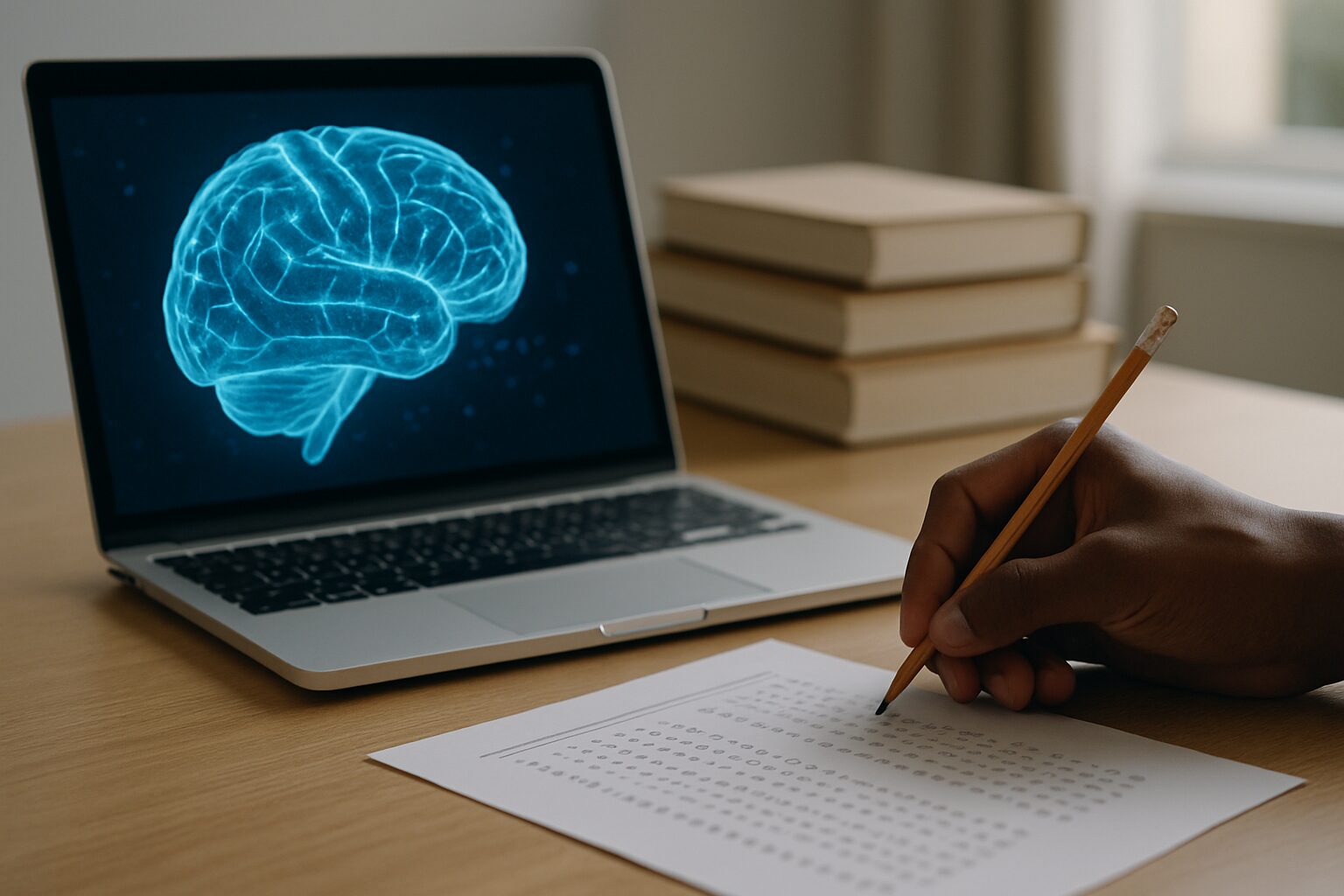
The Future of Exams: How Tech is Reshaping Education Assessments
The use of artificial intelligence in standardized testing has sparked debates about fairness, accessibility, and the role of technology in education. AI can streamline test administration and scoring, but concerns arise over potential biases in algorithms and unequal access to AI-driven tools. These discussions highlight broader ethical questions about how automated systems influence educational outcomes and opportunities.
Why It Matters - Real-world impact
The debate around AI in standardized testing has real-world consequences for students, educators, and society. Students' futures hinge on fair assessments, as test scores influence college admissions, scholarships, and career opportunities. If AI systems perpetuate biases or fail to account for diverse learning styles, marginalized groups could face further disadvantage. Educators and institutions risk relying on opaque algorithms that may misjudge student potential or replace human judgment entirely. For regular people, this matters because inequitable testing can deepen societal divides, limit upward mobility, and erode trust in education systems. The stakes are high—getting this wrong could reinforce systemic inequities for generations.
Ethical Concerns - What’s wrong or risky?
Fairness in AI-Driven Testing
One of the primary ethical risks in using AI for standardized testing is the potential for unfairness. AI systems may inadvertently favor certain demographic groups if the training data is not representative. For example, if an AI is trained on data from students in affluent areas, it may perform poorly when assessing students from under-resourced schools, leading to biased outcomes. This raises concerns about whether AI can truly provide an equitable assessment for all test-takers. More on this can be explored in our discussion on fairness.
Discrimination Risks
AI algorithms can perpetuate or even exacerbate existing discrimination. If historical data used to train these systems contains biases—such as lower scores correlated with race, gender, or socioeconomic status—the AI might replicate these patterns. This could result in discriminatory outcomes, where certain groups are systematically disadvantaged in educational opportunities. For a deeper look, see our page on discrimination.
Transparency and Accountability
Many AI systems operate as "black boxes," making it difficult to understand how decisions are made. In the context of standardized testing, this lack of transparency can be problematic. Students, educators, and institutions may not be able to scrutinize or challenge AI-generated scores, leading to accountability issues. Ensuring that AI processes are explainable is crucial for maintaining trust. Learn more about this in our section on transparency.
Differing Perspectives
Not all stakeholders view these risks uniformly. Proponents argue that AI can reduce human bias and provide more consistent scoring, potentially leveling the playing field. Critics, however, worry that without stringent oversight, AI could entrench inequalities. Some educators emphasize the need for human oversight, while technologists advocate for improved algorithmic fairness measures.
Additional Ethical Concerns
Beyond fairness, discrimination, and transparency, other moral issues arise. The economic impact of AI in testing could widen gaps if access to AI-enhanced preparation tools is unequal. There are also concerns about job loss for human scorers and the broader implications for worker rights in education. Each of these areas warrants careful ethical consideration.
Solutions - What’s being done or proposed?
Algorithmic Transparency and Explainability
One proposed solution is to mandate transparency in AI systems used for standardized testing. This includes requiring test providers to disclose how algorithms score essays or evaluate responses, ensuring that educators and students understand the criteria. Some organizations have developed explainable AI frameworks that provide clear rationales for scoring decisions, helping to build trust and allowing for human oversight.
Human-AI Collaboration in Scoring
To mitigate biases and errors, some institutions have adopted hybrid scoring models where AI handles initial evaluations, but human graders review borderline or disputed cases. This approach leverages AI's efficiency while retaining human judgment for nuanced or ambiguous responses. Studies suggest this method improves fairness and accuracy in high-stakes testing environments.
Bias Audits and Regular Updates
Regular audits of AI testing systems for demographic biases (e.g., race, gender, socioeconomic status) have been implemented by some testing companies. Independent third parties evaluate whether certain groups are systematically disadvantaged by scoring algorithms. When biases are detected, the models are retrained with more representative data. Legislation in some regions now requires such audits for educational AI tools.
Alternative Assessment Methods
Some educators advocate moving away from AI-graded standardized tests entirely, proposing project-based assessments or portfolios evaluated by teachers. Schools experimenting with this approach argue it better captures student growth and reduces reliance on potentially flawed automated systems. However, scalability remains a challenge for widespread implementation.
Student Data Privacy Protections
In response to concerns about data misuse, new policies have been introduced to strictly limit how AI testing systems collect and store student information. Some jurisdictions now require parental consent for AI-based assessments and mandate data anonymization. Technical solutions like federated learning, where data isn't centrally stored, are also being explored to protect privacy while allowing model improvement.
Teacher and Administrator Training Programs
Professional development initiatives help educators understand AI testing limitations and proper score interpretation. Some districts require training on recognizing when to challenge automated results or request human review. These programs aim to prevent over-reliance on AI outputs and ensure educators remain the primary decision-makers regarding student progress.
Examples and Real Cases
ChatGPT and the SAT
In 2023, OpenAI's ChatGPT was found to score in the 93rd percentile on the SAT reading and writing section, raising concerns about the test's ability to assess human students fairly if AI can perform so well. Critics argued this could devalue the SAT unless the test is redesigned to focus on skills AI cannot replicate.
Georgia State's AI-Powered Admissions
In 2022, Georgia State University used an AI system to evaluate applicant essays, aiming to reduce bias. However, some educators raised concerns that the AI might favor formulaic writing styles over creativity, potentially disadvantaging unconventional thinkers.
Hypothetical: AI-Graded AP Exams
If the College Board introduced AI grading for AP exams in 2025, it could streamline scoring but might struggle to assess nuanced arguments or cultural context in essays. This could lead to protests from teachers who believe human graders better understand student intent.
China's AI Surveillance in Gaokao
During China's 2021 Gaokao (national college entrance exam), AI proctoring systems flagged over 1,000 students for 'suspicious behavior' like looking away from screens. Critics argued the system could penalize normal test-taking habits, adding stress to an already high-pressure environment.
Hypothetical: AI Bias in LSAT Scoring
If a 2024 study found that an AI LSAT grader scored non-native English speakers 15% lower on logic sections due to phrasing differences, it could reignite debates about fairness in high-stakes testing and the need for human oversight in AI systems.
Frequently Asked Questions
What is the debate about AI and standardized testing?
The debate focuses on whether AI can improve standardized testing by making it more fair and efficient, or if it might introduce new biases and inequalities in education.
Why is AI in standardized testing important?
AI could help personalize tests, reduce grading errors, and make exams more accessible, but it also raises concerns about data privacy, fairness, and whether it disadvantages certain student groups.
How does AI affect access to standardized testing?
AI can make tests more accessible by offering adaptive formats for students with disabilities or language barriers, but it may also widen gaps if not all schools or students have equal access to AI tools.
What can we learn from AI in standardized testing debates?
These debates highlight the need to balance innovation with equity, ensuring AI tools don't reinforce existing inequalities in education while improving assessment methods.
How is AI used in standardized testing today?
Today, AI is used for tasks like automated essay scoring, detecting cheating, and creating adaptive tests that adjust difficulty based on student responses, though its adoption varies by region and institution.